Neurological Blood Tests: The Direct Answer
Neurological blood tests can help identify treatable or clinically relevant contributors to memory change, numbness, weakness, headache, balance problems, and other neurological symptoms. Common questions involve blood-cell patterns, glucose regulation, thyroid function, vitamin B12 and other nutrients, electrolytes, organ function, selected infections, inflammation, and protein abnormalities. Specialist-directed blood biomarkers may also support a structured Alzheimer evaluation in an appropriate symptomatic person. The central limitation is that blood testing rarely diagnoses a brain or nerve disorder by itself. Results must be interpreted with the symptom pattern, medications, history, neurological examination, cognitive assessment, and any needed imaging, electrical studies, cerebrospinal-fluid testing, or specialist evaluation.
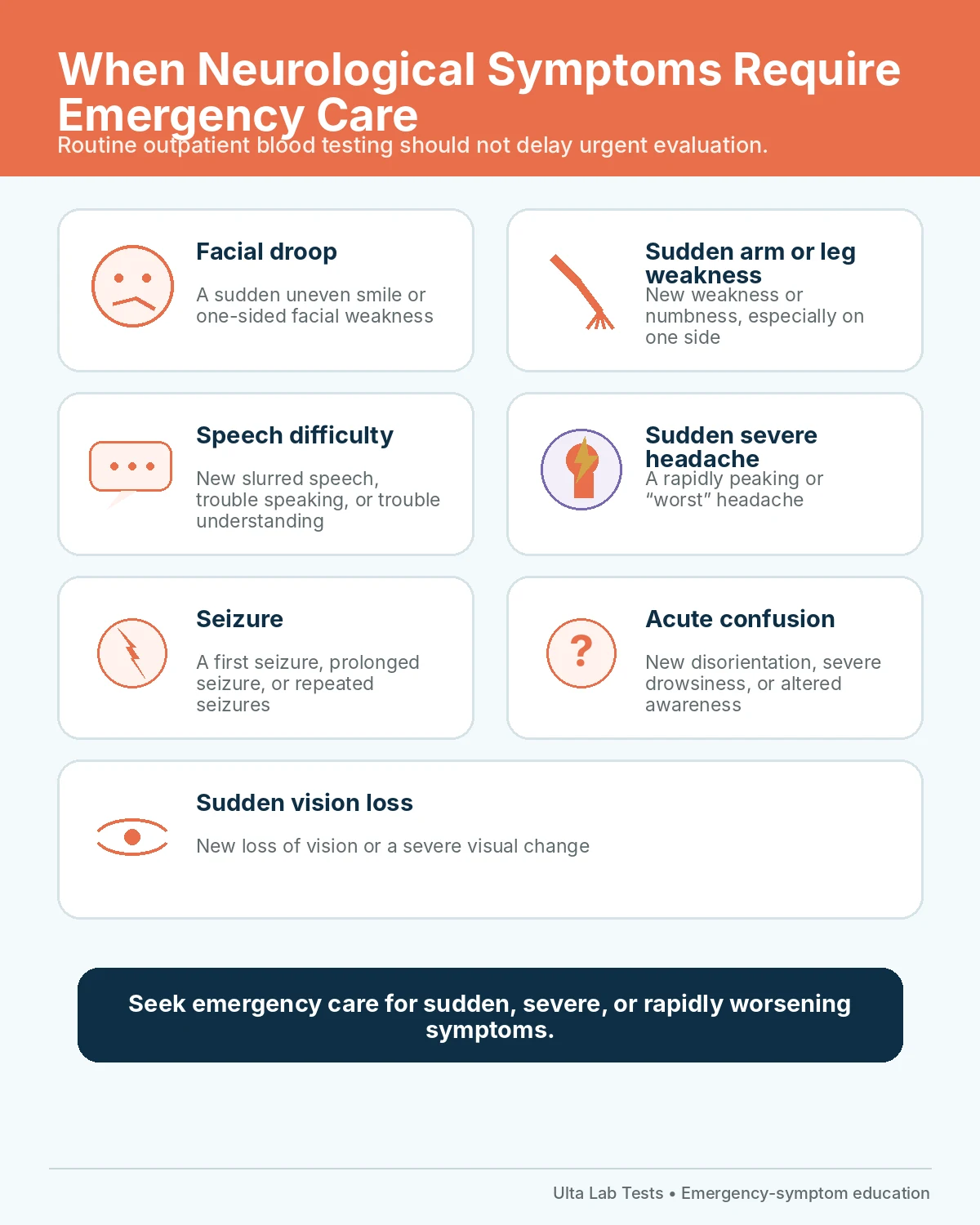
Get urgent help now: Call 911 for a new facial droop, one-sided weakness or numbness, trouble speaking, a sudden severe headache, seizure, fainting, rapidly worsening confusion, new loss of vision, severe imbalance, or symptoms after a significant head injury. Routine outpatient testing must not delay emergency evaluation.
Written by: John R.
Originally published: August 1, 2026. Substantively updated: August 10, 2026.
This patient-facing guide is educational. It does not diagnose a neurological condition, replace professional care, or provide instructions to start, stop, or change a prescription medication or supplement.
For an overview of specimens, panels, screening, diagnostic support, monitoring, and test selection, review The Complete Guide to Lab Tests and Blood Work. For help understanding units, reference intervals, flags, thresholds, and trends, use How to Read and Understand Your Lab Results. For ordering, preparation, collection, result delivery, and responsible follow-up, see Direct-Access Lab Testing: How It Works and What to Expect.
Neurological symptoms frequently overlap with diabetes and prediabetes blood testing, thyroid blood testing, vitamin and nutrient deficiency testing, and healthy aging and longevity blood testing.
| Question | Practical answer |
|---|---|
| What can blood tests identify? | Metabolic, endocrine, nutritional, hematologic, inflammatory, infectious, toxic, protein-related, and selected genetic or biomarker findings that may contribute to a neurological evaluation. |
| Can a blood test diagnose migraine or neuropathy? | Usually not. Migraine is primarily diagnosed clinically, and neuropathy often requires a neurological examination plus selected electrodiagnostic, imaging, or other testing. |
| Can a blood test diagnose Alzheimer's disease? | No single result should be interpreted as a stand-alone diagnosis. Blood biomarkers may support an assay-specific workup in an appropriate symptomatic person. |
| Should everyone order a large panel? | No. Broad panels increase cost and the chance of incidental, false-positive, or difficult-to-interpret findings. Testing should match the symptom pattern and pretest probability. |
| What makes a result actionable? | An actionable result changes a decision, such as prompting confirmation, treating a verified contributor, reviewing a medication, arranging imaging, or making an appropriate referral. |
| What is the most important limitation? | A laboratory result does not establish that an abnormality caused the symptom and cannot replace history, examination, cognitive testing, imaging, or specialist evaluation. |
Neurological blood tests are laboratory studies used to investigate biological factors that can mimic, worsen, or accompany symptoms involving thinking, sensation, movement, balance, pain, or behavior. They do not form one fixed panel. The useful combination depends on the symptom, its timing and progression, age, examination findings, medications, nutrition, medical conditions, family history, life stage, and exposure risks.
A person with gradually progressive memory change may need a different evaluation from someone with episodic migraine, rapidly ascending numbness, a new tremor, or acute confusion. The same laboratory abnormality can also have different meanings in different settings. For example, an altered thyroid result may be relevant to fatigue and slowed thinking, but it does not prove that thyroid disease caused every neurological complaint.
Memory difficulty, fatigue, slowed thinking, dizziness, headache, sleep disruption, tingling, and poor concentration are not specific to one disease. Sleep problems, depression or anxiety, medication effects, alcohol or other substances, nutrient deficiency, thyroid dysfunction, glucose abnormalities, organ dysfunction, infection, pain, and a primary neurological disorder may create overlapping symptoms. More than one contributor can be present at the same time.
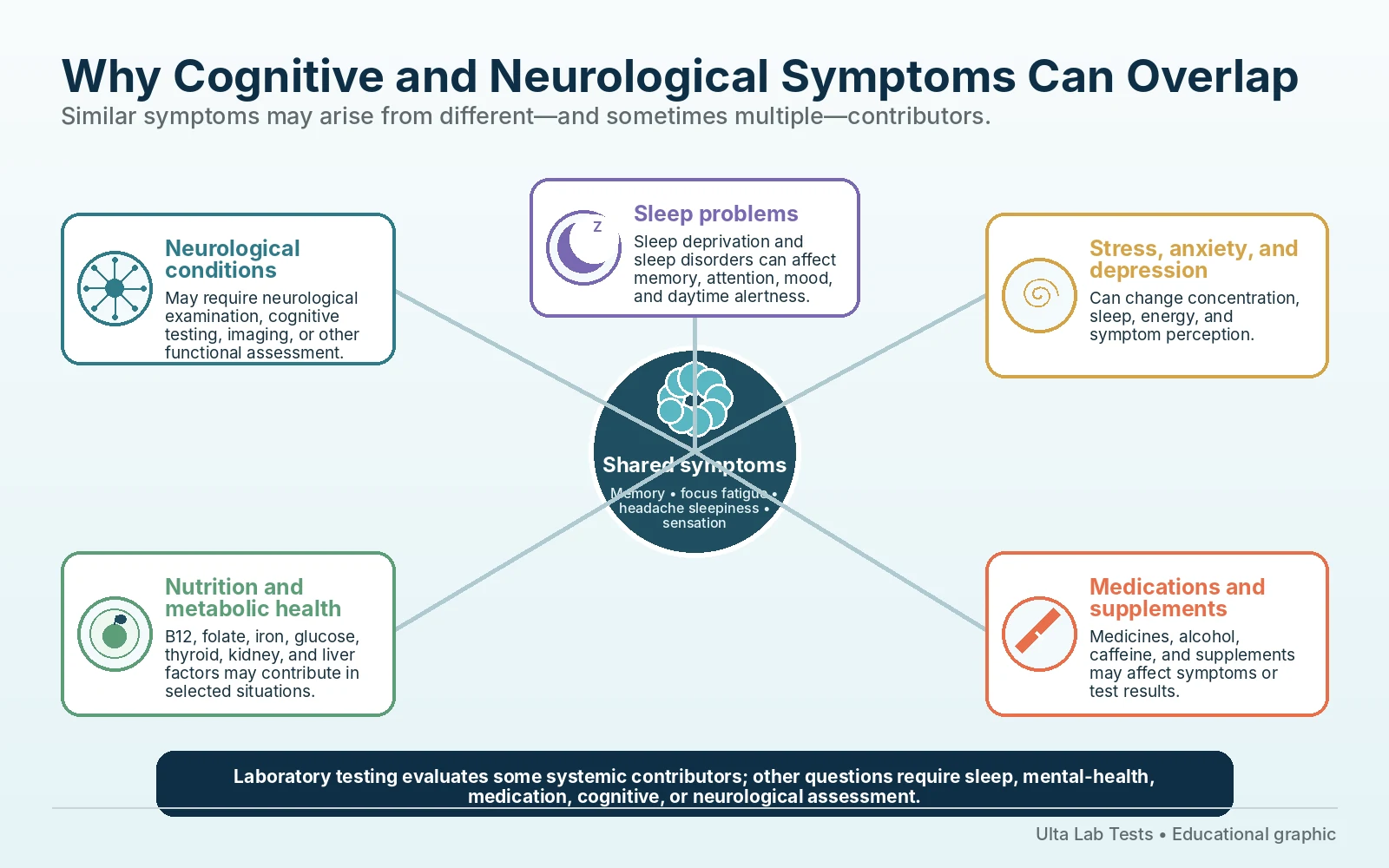
Laboratory testing can add objective information, but it cannot determine the complete explanation without the timeline, functional impact, medication and supplement history, mental-health and sleep assessment, physical and neurological examination, and any needed imaging or specialist testing.
| Testing may help with | Testing cannot do by itself |
|---|---|
| Detect anemia, electrolyte disturbance, glucose dysregulation, thyroid dysfunction, selected nutrient abnormalities, or organ-function patterns. | Establish that an abnormal result caused the neurological symptom. |
| Identify findings that may need confirmation, treatment, monitoring, or clinical follow-up. | Replace a history, neurological examination, cognitive assessment, mental-health review, sleep evaluation, or medication review. |
| Support risk-based evaluation for selected infections, protein disorders, or systemic inflammatory processes. | Rule out stroke, hemorrhage, tumor, seizure, multiple sclerosis, spinal-cord compression, or another structural or electrical disorder. |
| Provide assay-specific biomarker or susceptibility information within a memory-disorder pathway. | Predict with certainty whether an individual will develop dementia, how quickly symptoms will change, or whether a treatment will work. |
Blood testing samples one part of the diagnostic picture. Depending on the question, evaluation may also include a neurological examination, standardized cognitive testing, magnetic resonance imaging, computed tomography, electroencephalography, electromyography and nerve-conduction studies, lumbar puncture, sleep evaluation, toxicology testing, genetic counseling, or specialist referral.
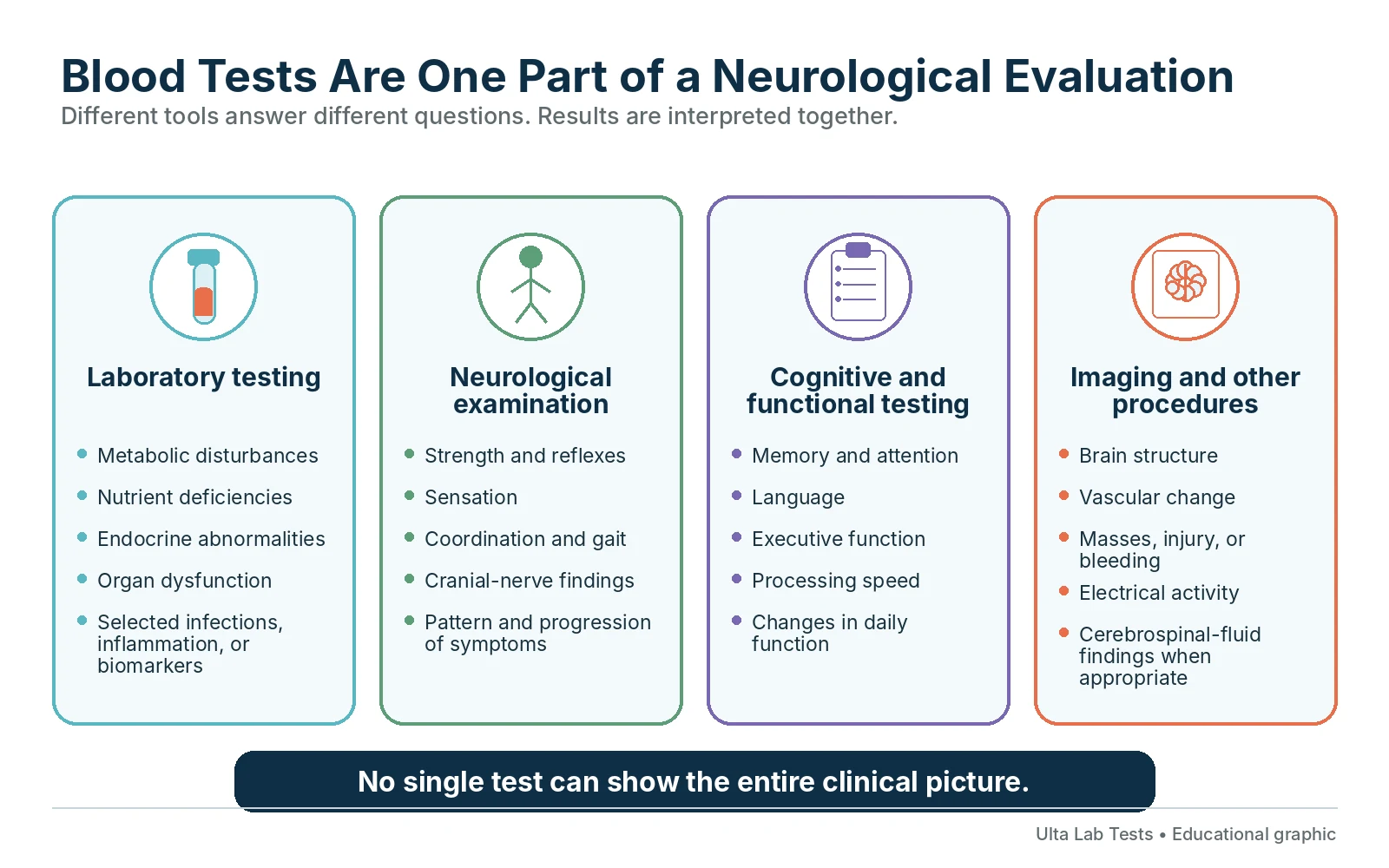
| Clinical question | Evaluation that may be needed | Why blood alone is insufficient |
|---|---|---|
| Could this be an acute stroke or hemorrhage? | Emergency examination and brain imaging. | Blood markers do not locate an acute lesion or safely exclude bleeding. |
| Is a peripheral nerve damaged, and where? | Neurological examination and sometimes electrodiagnostic testing. | A blood result may suggest a contributor but does not map nerve function. |
| What is causing progressive cognitive decline? | Patient and informant history, cognitive assessment, medication review, functional evaluation, and sometimes imaging or biomarkers. | Symptoms can arise from multiple overlapping causes, and an abnormal biomarker does not define the complete diagnosis. |
| Is this headache a typical migraine or a secondary emergency? | Clinical assessment guided by onset, red flags, examination, pregnancy status, and selective imaging. | Routine blood tests neither diagnose migraine nor exclude dangerous intracranial causes. |
Educational framework - not a diagnostic or treatment algorithm. A focused pathway begins with the symptom and urgency, then asks which common or targeted contributors are plausible and which result would change the next step.
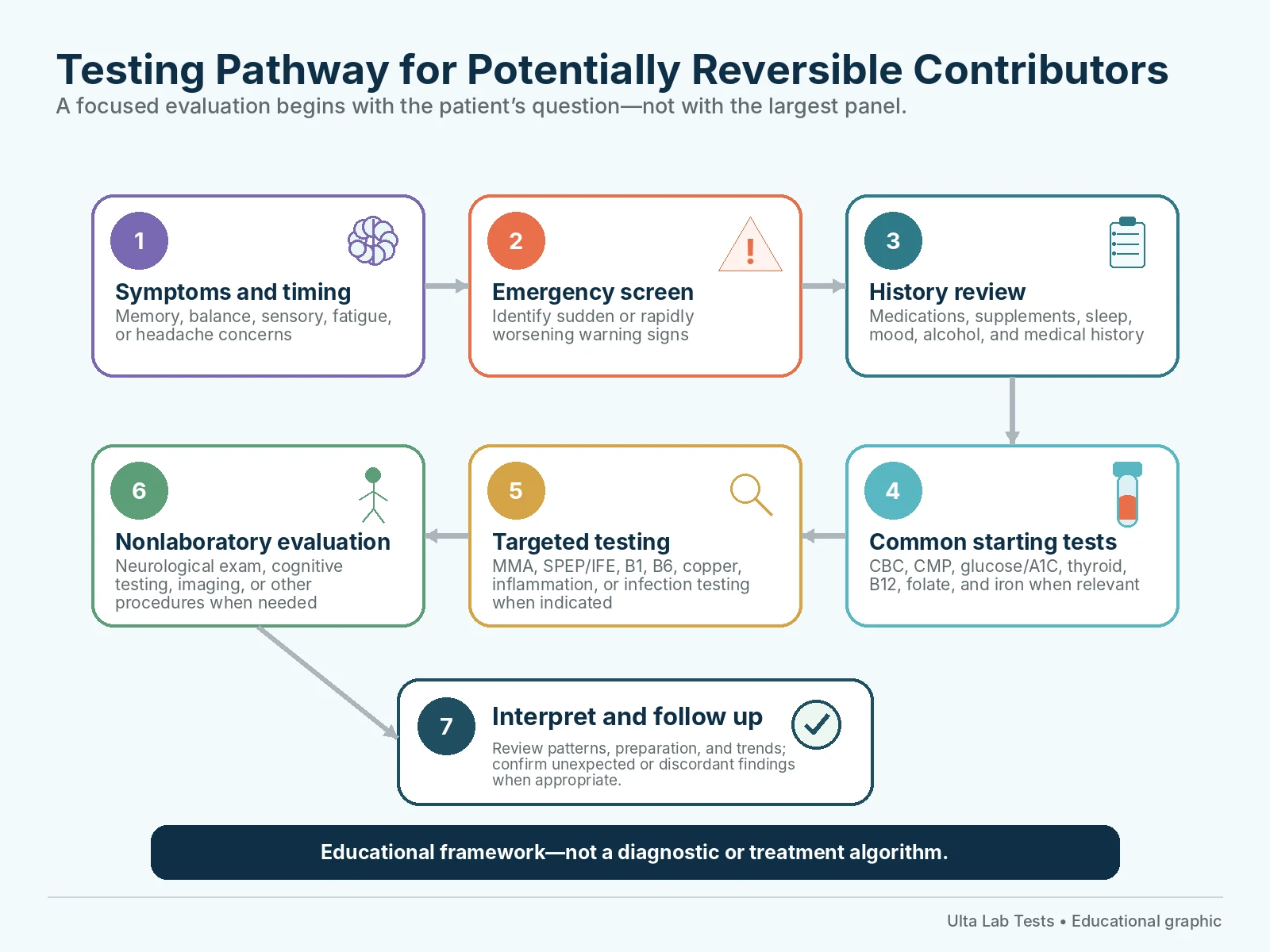
The goal is not to order every available test. It is to start with the symptom pattern, identify urgent features, and choose tests that can answer plausible questions.
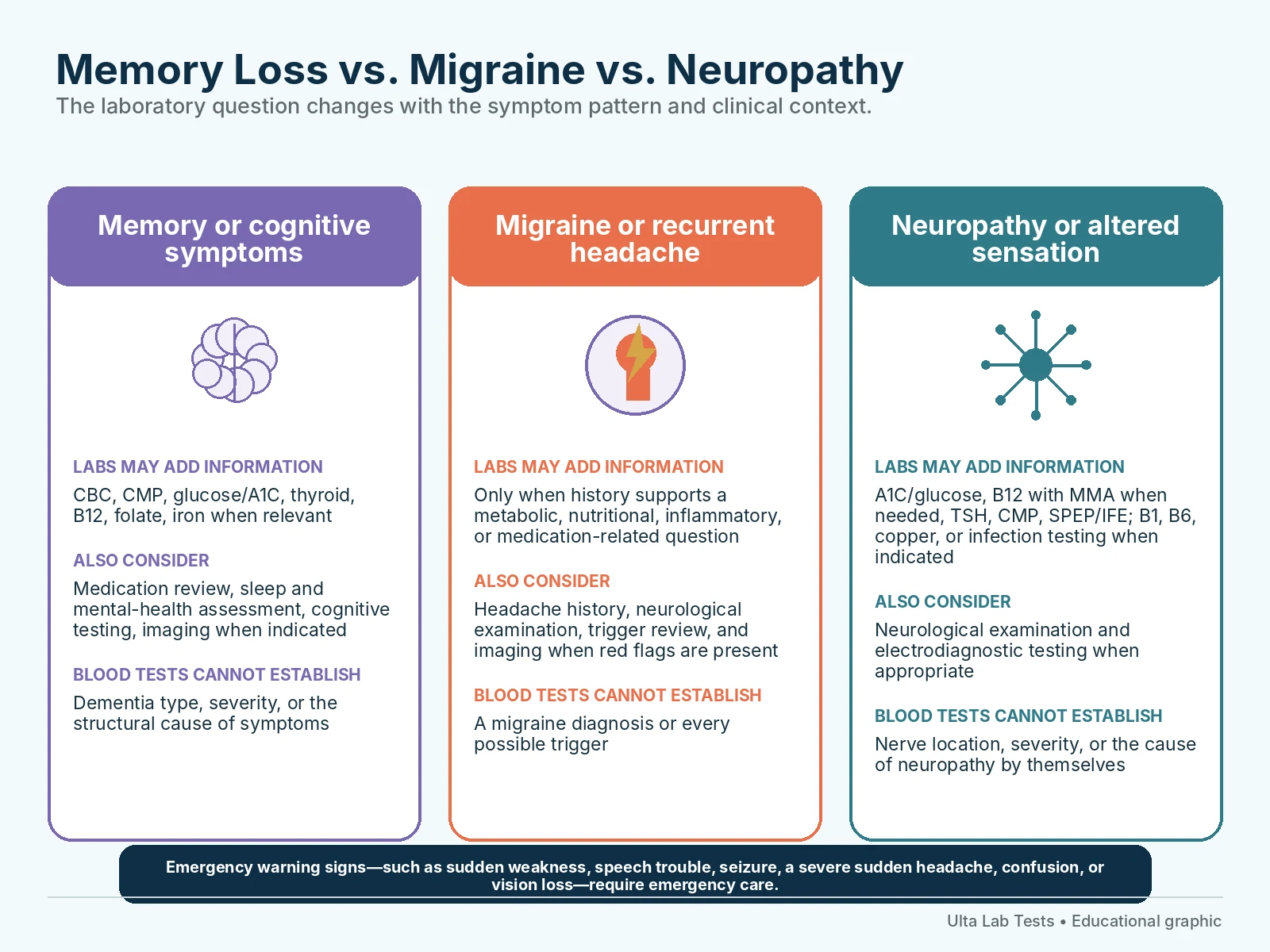
| Presentation | Questions to clarify | Possible blood-testing role | Common next steps beyond blood |
|---|---|---|---|
| Memory or thinking change | Onset, progression, daily-function impact, sleep, mood, medications, substance exposure, and collateral history. | Look for reversible or contributing systemic factors; consider an assay-specific Alzheimer biomarker pathway only when clinically appropriate. | Cognitive assessment, medication review, neurological evaluation, and selected imaging. |
| Migraine or recurrent headache | Sudden versus gradual onset, pattern change, fever, pregnancy, cancer or immune history, focal symptoms, and medication use. | Usually limited; targeted testing may be appropriate when anemia, metabolic disturbance, infection, inflammation, or another systemic cause is plausible. | Headache-focused examination, treatment review, and selective imaging for red flags. |
| Numbness, tingling, or burning feet | Distribution, symmetry, weakness, gait change, diabetes, alcohol use, nutrition, medications, toxic exposure, and family history. | Assess common metabolic, nutritional, endocrine, and selected protein-related contributors. | Neurological examination, foot-safety assessment, and sometimes electrodiagnostic testing. |
| Weakness or gait change | True loss of strength versus fatigue, sudden versus progressive onset, bowel or bladder symptoms, back or neck pain, and falls. | Target likely electrolyte, endocrine, nutritional, inflammatory, or systemic contributors. | Prompt clinical examination; emergency evaluation for acute or rapidly progressive findings. |
| Confusion or altered behavior | Time course, fever, medication changes, substance exposure, dehydration, organ dysfunction, and safety. | May identify glucose, electrolyte, organ-function, endocrine, hematologic, or infectious abnormalities. | Acute confusion generally requires same-day clinical evaluation rather than self-directed outpatient testing. |
Testing tiers separate common clinical-context questions from targeted, monitoring, specialist-directed, emerging, and low-value screening uses. A larger or more expensive panel is not automatically better.
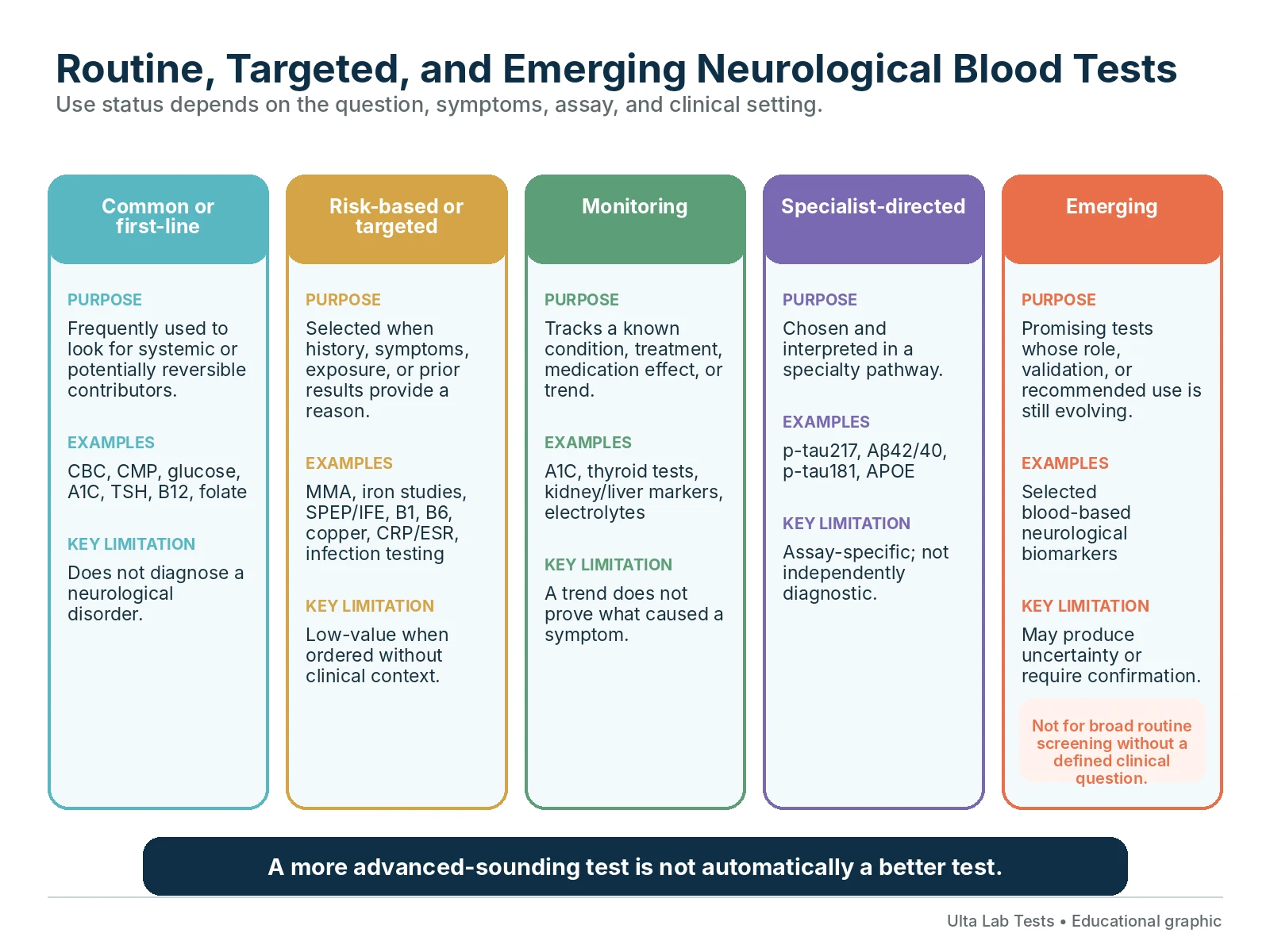
Initial testing often focuses on blood counts, metabolic status, glucose regulation, thyroid function, and vitamin B12 status. This is not a universal order set. Tests should be added, removed, or sequenced according to the presentation.
Selected nutrient, inflammation, protein, or infectious tests are most useful when history, examination, diet, medications, surgery, exposure, geography, or an earlier result creates a specific reason to order them.
Monitoring may follow a known deficiency, glucose disorder, thyroid condition, medication effect, organ-function change, or another established finding. The interval should match the biology, treatment plan, and clinical need.
Protein studies, genetic tests, and Alzheimer-related biomarkers may require specialist selection, counseling, assay-specific interpretation, and a planned confirmatory pathway.
Some biomarkers are promising but still method- and population-dependent. Performance claims, thresholds, and intended uses cannot be transferred from one platform to another.
Unselected inflammation testing, broad infectious screening without exposure risk, genetic susceptibility testing without counseling, and Alzheimer biomarkers in asymptomatic people are not general neurological wellness tests.
| Decision point | Why it matters |
|---|---|
| What exact diagnosis or contributor is plausible? | A defined hypothesis improves the chance that a result will be interpretable. |
| Will a positive, negative, or indeterminate result change the next step? | When every result leads to the same action, the test may not add value. |
| Does the assay apply to this person and setting? | Performance depends on the tested population, method, specimen, cutoff, and disease prevalence. |
| Is confirmation available? | Many abnormal or emerging findings require repeat testing, another method, imaging, cerebrospinal-fluid testing, or specialist review. |
| What are the consequences of a false-positive or false-negative result? | The balance of missed disease, anxiety, cost, unnecessary procedures, and delayed evaluation should shape test selection. |
The linked products below are examples available through Ulta Lab Tests. The appropriate test, specimen, preparation, and interpretation depend on the exact product and the clinical question. Follow the current instructions on the selected product page. A test link does not mean the test is appropriate for every reader.
| Test and quick facts | What it shows and how it is used | Preparation, influences, and limitations |
|---|---|---|
| Complete Blood Count with Differential and Platelets Aliases: CBC, complete blood count Use status: Common or first-line | Measures red cells, white cells, platelets, hemoglobin, and related indices. It may identify anemia, infection-related patterns, or blood-cell abnormalities that contribute to fatigue, weakness, dizziness, or cognitive symptoms. | Usually no fasting is required. Hydration, pregnancy, altitude, illness, medications, and laboratory method can influence results. A CBC cannot identify the cause of neurological symptoms or diagnose a brain disorder. |
| Comprehensive Metabolic Panel Test Aliases: CMP, metabolic panel Use status: Common or first-line | Assesses glucose, electrolytes, kidney-related markers, liver-related markers, proteins, and calcium. It can identify systemic disturbances that may cause or worsen confusion, weakness, cramps, or altered sensation. | Fasting depends on the selected product and question. Meals, hydration, exercise, supplements, medicines, acute illness, and specimen handling can affect components. A CMP does not localize neurological disease. |
| Glucose Test Aliases: blood glucose, serum glucose Use status: Common or targeted | Measures glucose at collection. It can identify low or high values and contributes to diabetes evaluation, which may be relevant to neuropathy and vascular risk. | Fasting status matters. Food, stress, exercise, illness, corticosteroids, insulin, diabetes medicine, and specimen delay can alter results. One value does not establish the cause of confusion or neuropathy. |
| Hemoglobin A1C Test Aliases: A1C, HbA1c, glycated hemoglobin Use status: Common, monitoring, or targeted | Estimates average glycemic exposure over the preceding several months. It is used in diabetes screening, diagnostic support, and monitoring and may provide context for neuropathy and vascular cognitive risk. | Fasting is usually unnecessary. Anemia, blood loss, transfusion, hemoglobin variants, pregnancy, kidney disease, and altered red-cell lifespan can affect accuracy. A1C does not prove diabetes caused a neurological symptom. |
| TSH Test with Reflex to Free T4 Aliases: reflex thyroid testing, thyrotropin with reflex Use status: Common or first-line | Measures TSH and adds Free T4 under the laboratory reflex rule. It evaluates thyroid dysfunction as a potentially treatable contributor to slowed thinking, fatigue, tremor, weakness, or sensory symptoms. | Timing relative to thyroid medicine may matter. Biotin, pregnancy, acute illness, pituitary disease, amiodarone, lithium, glucocorticoids, and assay method can affect results. It does not diagnose a neurological disorder. |
| TSH Test Aliases: thyroid-stimulating hormone Use status: Targeted alternative | Measures TSH without automatically adding another analyte. It may be appropriate when a stand-alone result fits the testing plan. A separate Free T4 Test may be needed. | This is not the same product as a reflex test. Product selection should match the intended thyroid evaluation, medication status, pituitary context, and follow-up plan. |
| Vitamin B12 Test Aliases: cobalamin Use status: Common or first-line | Measures circulating vitamin B12. It is commonly considered for memory concerns, gait change, numbness, macrocytosis, vegan diets, malabsorption, gastrointestinal surgery, metformin use, or acid-suppressing therapy. | Fasting is usually unnecessary. Supplements, injections, binding-protein changes, liver disease, kidney disease, and assay method can influence results. A borderline or discordant value may need functional confirmation. |
| Folate, Serum Aliases: folate, vitamin B9 Use status: Targeted | Measures circulating folate, which is influenced by recent intake. It may help evaluate macrocytosis, restricted diet, malabsorption, alcohol use, or selected medication exposures and should be interpreted with B12 status. | The laboratory may request fasting. Meals, supplements, pregnancy, alcohol, hemolysis, and medications can alter results. Serum folate does not diagnose depression, dementia, or the cause of macrocytosis. |
| Ferritin Test Aliases: ferritin, iron-storage marker Use status: Targeted | Estimates iron stores and may be useful when anemia, blood loss, dietary risk, fatigue, or restless-legs symptoms are part of the question. High ferritin is nonspecific and may reflect inflammation, liver disease, metabolic disease, or iron excess. | Inflammation, infection, liver disease, recent iron intake, and blood loss can affect results. Ferritin alone does not determine whether iron treatment is appropriate. |
| Ferritin, Iron and Total Iron-Binding Capacity Panel Aliases: iron studies, ferritin, iron, TIBC, transferrin saturation Use status: Targeted panel | Combines iron-storage and iron-transport measures. It may help distinguish depleted iron stores from other patterns when the history and blood count support an iron-related question. | Morning or fasting collection may be requested. Recent iron intake, inflammation, liver disease, blood loss, and time of day can influence the pattern. Interpret all components together. |
Product distinctions: The stand-alone A1C Test is not the same product as the Hemoglobin A1c and Glucose Panel. The stand-alone TSH Test is not interchangeable with the TSH Test with Reflex to Free T4. When both B-vitamin measurements are appropriate, the Vitamin B12 and Folate Panel combines two related analytes but does not replace functional follow-up when B12 is borderline or discordant.
| Test and quick facts | What it shows and how it is used | Preparation, influences, and limitations |
|---|---|---|
| Methylmalonic Acid Test Aliases: MMA Use status: Targeted | Measures a metabolite that may rise when B12-dependent metabolism is impaired. It can clarify suspected functional B12 deficiency when serum B12 is borderline, discordant, or affected by supplements. | Follow fasting instructions. Kidney impairment, age, dehydration, bacterial overgrowth, and recent B12 treatment can affect results. MMA cannot establish the cause of neuropathy or cognitive symptoms. |
| Homocysteine Test Aliases: total homocysteine Use status: Targeted | Measures an amino-acid intermediate influenced by folate, B12, B6, kidney function, genetics, and other factors. It may add context when a B-vitamin deficiency or defined vascular or metabolic question is present. | Fasting may be requested. Supplements, kidney impairment, smoking, alcohol, hypothyroidism, age, genetics, and medicines can alter results. An elevation is nonspecific and is not a stand-alone treatment target. |
| Protein, Total and Protein Electrophoresis with Immunofixation, Serum Aliases: SPEP with immunofixation, serum IFE Use status: Targeted or specialist-directed | Shows serum-protein distribution and whether a monoclonal immunoglobulin is detected. It may be used in selected distal symmetric neuropathies or when systemic features raise concern for a monoclonal gammopathy. | Fasting is usually unnecessary. Infection, inflammation, immune therapy, low immunoglobulins, and specimen quality can affect the pattern. A detected protein does not prove it caused neuropathy or establish a specific cancer. |
| Vitamin B1, Blood Aliases: thiamine, thiamin Use status: Targeted | Assesses thiamine status when malnutrition, prolonged vomiting, heavy alcohol use, bariatric surgery, malabsorption, or compatible neurological findings raise concern. | Follow specimen instructions. Supplementation, transfusion, diet, handling, and method can affect results. Suspected acute thiamine-related neurological illness requires urgent care and should not wait for routine testing. |
| Vitamin B6 Test Aliases: pyridoxine, pyridoxal-5-phosphate, PLP Use status: Targeted | Measures a principal circulating form of B6 and may help investigate deficiency or supplement-related excess in selected sensory-neuropathy presentations. | Follow preparation instructions. Supplements, nonfasting collection, inflammation, kidney function, and specimen handling can affect results. Both deficiency and excessive supplemental exposure require clinical context. |
| Copper Test Aliases: serum copper Use status: Targeted | Measures circulating copper and may be considered in selected cases of myelopathy, neuropathy, anemia, malabsorption, bariatric surgery, or excessive zinc exposure. | Trace-element collection matters. Inflammation, pregnancy, estrogen therapy, liver disease, zinc exposure, supplements, and contamination can alter results. Serum copper alone does not diagnose a genetic copper disorder. |
| Magnesium Test Aliases: serum magnesium, Mg Use status: Targeted | Measures serum magnesium and may be useful when gastrointestinal loss, kidney disease, diuretic use, arrhythmia, muscle symptoms, or another factor raises concern for deficiency or excess. | Fasting is usually unnecessary. Kidney function, diuretics, acid-suppressing medicines, supplements, hemolysis, and recent intravenous therapy can affect results. Serum magnesium does not perfectly represent body stores or diagnose migraine. |
| C-Reactive Protein Test Aliases: CRP Use status: Targeted; not broad neurological screening | Measures a nonspecific acute-phase protein. It may support evaluation when infection, vasculitis, giant-cell arteritis, or another systemic inflammatory process is plausible. | Infection, injury, obesity, chronic disease, pregnancy, smoking, and treatment can influence results. CRP does not diagnose migraine, dementia, autoimmune disease, or a general concept of brain inflammation. |
| Sed Rate Test Aliases: ESR, erythrocyte sedimentation rate Use status: Targeted; not broad neurological screening | Measures how quickly red cells settle and serves as an indirect, nonspecific inflammation marker. It may add information when inflammatory, infectious, malignant, or rheumatologic causes are plausible. | Fasting is usually unnecessary. Anemia, pregnancy, age, red-cell shape, immunoglobulin changes, acute illness, and medicines can affect results. ESR cannot establish or exclude a specific neurological disease. |
Infectious testing should follow exposure history, geography, immune status, examination, and timing. Testing a low-risk person broadly can create false-positive or ambiguous results and distract from a more likely explanation.
| Test and quick facts | What it shows and how it is used | Preparation, influences, and limitations |
|---|---|---|
| RPR Test with Reflex to Titer and Confirmatory Testing Aliases: RPR, syphilis screen with reflex Use status: Risk-based or targeted | Detects antibodies used within a syphilis testing algorithm. It may be ordered for relevant risk, symptoms, pregnancy-related screening, or neurological concerns supported by exposure history and examination. | Fasting is unnecessary. Prior infection or treatment, pregnancy, autoimmune disease, acute infection, immune status, and disease stage affect interpretation. A reactive screen requires confirmatory interpretation and does not diagnose neurosyphilis by itself. |
| Lyme Disease Antibody Test with Reflex to Blot IgG/IgM Aliases: Lyme serology, Borrelia antibodies Use status: Risk-based or targeted | Detects antibodies used in a Lyme testing algorithm. It is most useful when compatible symptoms occur with plausible tick exposure in an endemic area or after relevant travel. | Fasting is unnecessary. Antibodies may be absent early and may persist after infection. Timing, geography, rash, treatment history, cross-reactivity, and pretest probability are essential. Serology alone does not prove Lyme disease caused chronic nonspecific or neurological symptoms. |
HIV testing may be appropriate under preventive-screening guidance or when exposure and clinical context support it. This article intentionally does not link the broad phrase to one product because the exact test generation and reflex pathway must match the exposure question. Reactive screening results require the laboratory confirmatory algorithm.
| Test and quick facts | What it shows and how it is used | Preparation, influences, and limitations |
|---|---|---|
| AD-Detect Phosphorylated Tau 217, Plasma Aliases: p-tau217, pTau217 Use status: Specialist-directed; emerging; not broad screening | Measures plasma tau phosphorylated at threonine 217. In an appropriate symptomatic workup, it may help estimate the likelihood of Alzheimer-type amyloid and tau pathology within the exact assay pathway. | Follow product instructions. Kidney function, age, comorbidities, handling, platform, and validation population may affect interpretation. Cutoffs are assay-specific, and the result is not a stand-alone diagnosis. |
| AD-Detect Beta-Amyloid 42/40 Ratio, Plasma Aliases: amyloid-beta 42/40 ratio, A-beta 42/40 Use status: Specialist-directed; emerging; not broad screening | Measures the relative concentrations of amyloid-beta 42 and 40. In a defined symptomatic pathway, the ratio may help estimate the likelihood of cerebral amyloid pathology. | Preanalytical handling, platform, calibration, age, comorbidities, and validation population matter. There is no universal cutoff, and thresholds must not be transferred between assays. |
| AD-Detect Phosphorylated Tau 181, Plasma Aliases: p-tau181, pTau181 Use status: Specialist-directed; emerging; not broad screening | Measures plasma tau phosphorylated at threonine 181. Depending on exact validation, it may support triage or risk stratification in a person with cognitive concerns. | Platform, kidney function, age, comorbidities, handling, and disease prevalence affect performance. The assay cannot inherit another platform cutoff or regulatory claim. An abnormal result requires further evaluation. |
| ADmark APOE Genotype Analysis Aliases: APOE genotype, APOE e2/e3/e4 Use status: Specialist-directed; not broad screening | Identifies common inherited APOE variants. It may support selected risk counseling or anti-amyloid treatment-safety discussions when the result will change a defined decision. | Fasting is unnecessary. Genotype is not destiny. An APOE e4 copy raises population-level risk but does not diagnose Alzheimer disease or determine an individual future. Counseling should address emotional, family, privacy, and insurance implications. |
| AD-Detect Apolipoprotein E Isoform, Plasma Aliases: ApoE isoform, ApoE phenotype Use status: Specialist-directed; not broad screening | Measures a laboratory-detected ApoE protein isoform pattern. The ordering professional should confirm how it relates to DNA genotype and the intended clinical use. | Methodology, rare variants, phenotype limitations, specimen quality, and the interpretation framework matter. This is not complete DNA sequencing and cannot establish Alzheimer disease or future decline. |
Educational framework - not a diagnostic or treatment algorithm. Genetic susceptibility and Alzheimer-related biomarker results can affect the patient and family, yet may not provide a simple yes-or-no answer. A defined purpose and follow-up plan should exist before testing.
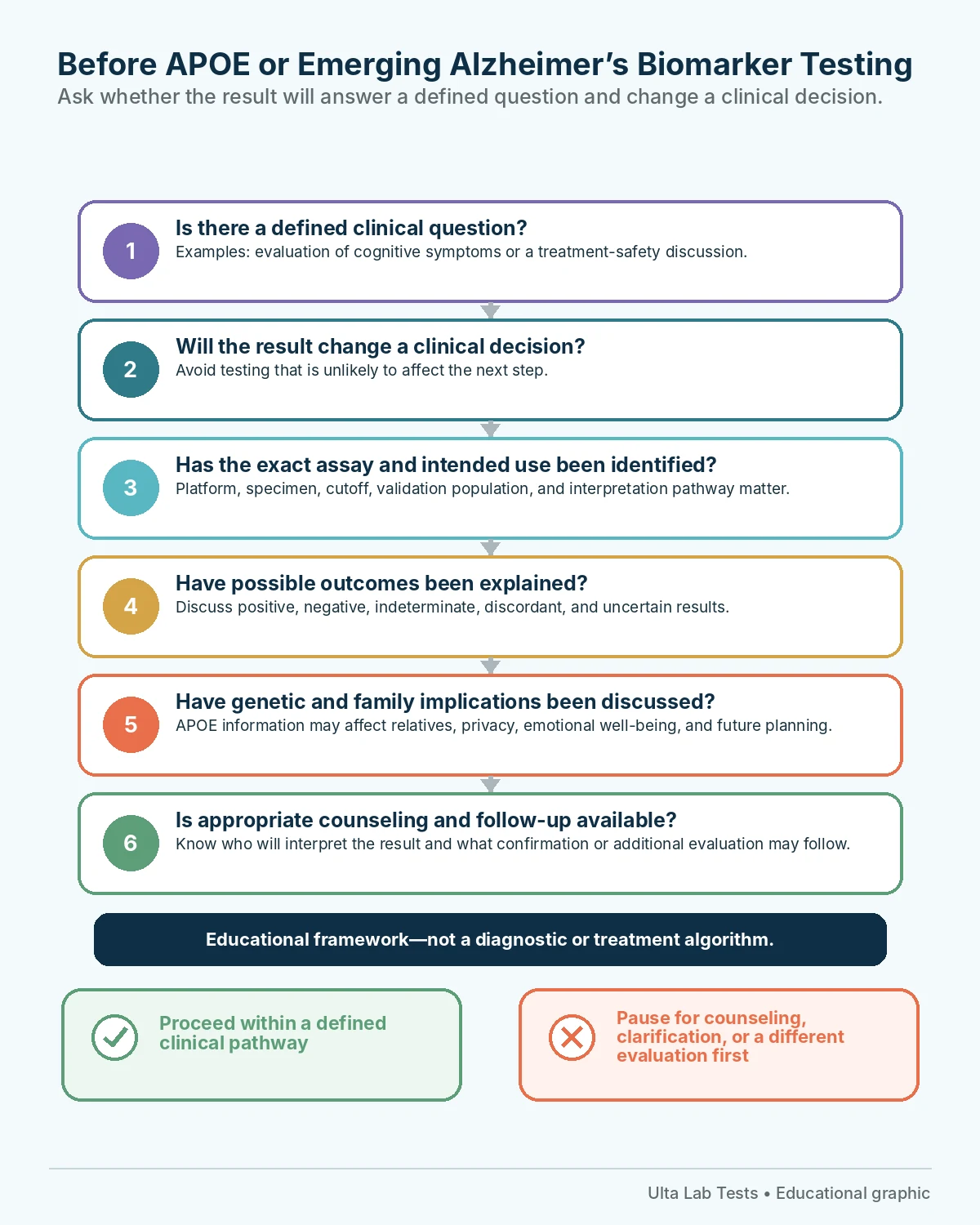
An "Alzheimer's blood test" is not one interchangeable product. Assays measure different proteins, ratios, or inherited variants, use different platforms and cutoffs, and may be validated for different populations and purposes.
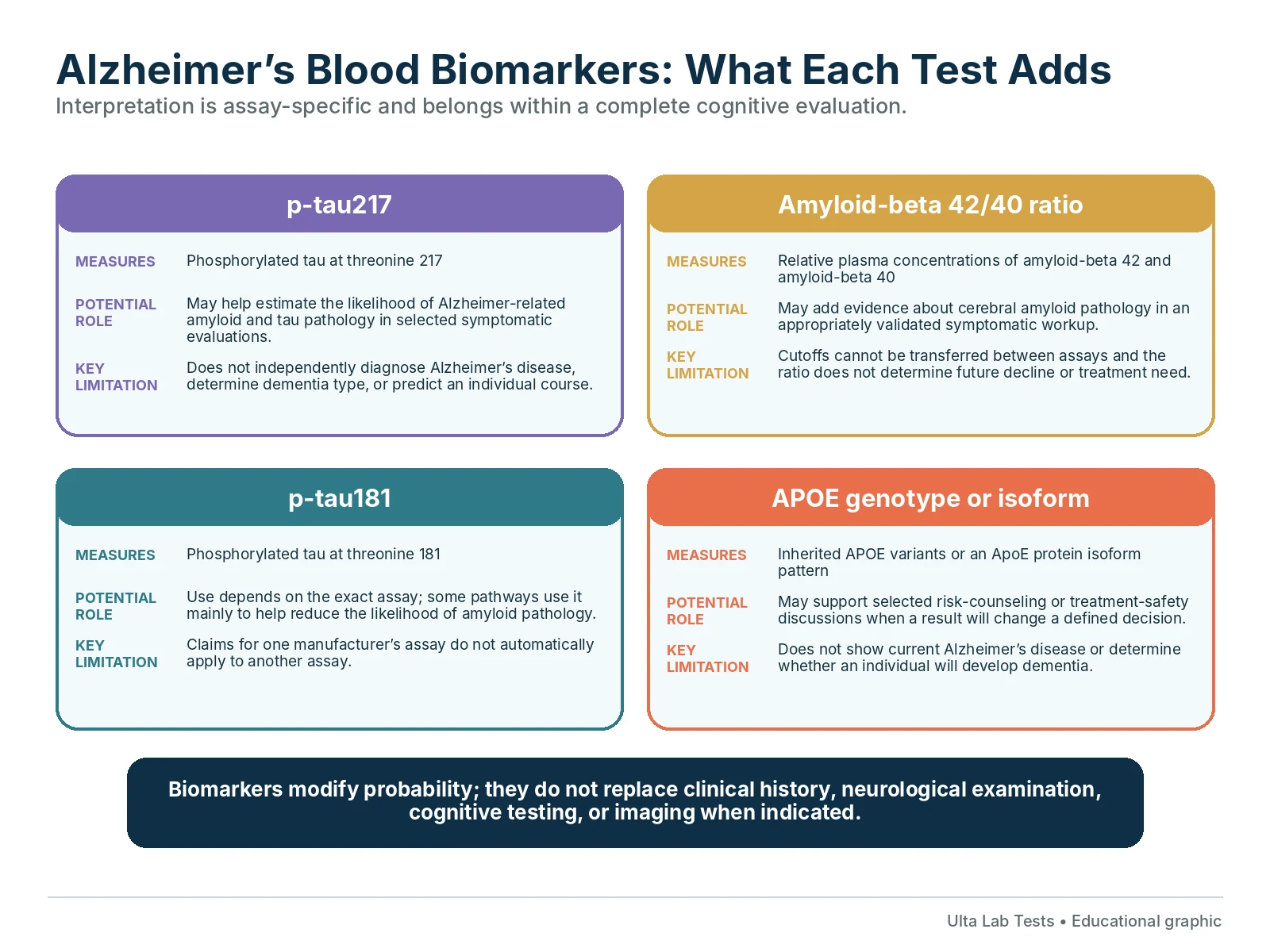
| Biomarker or method | Biological signal | Potential role | Typical next step | Major limitation |
|---|---|---|---|---|
| Plasma p-tau217 | Tau phosphorylation associated with Alzheimer-type amyloid and tau pathology. | Assay-specific triage or pathology assessment in selected symptomatic patients. | Clinical correlation; an intermediate or discordant result may lead to specialist evaluation, another validated biomarker, cerebrospinal-fluid testing, or amyloid imaging. | Cutoffs and performance vary by platform, comorbidity, setting, and disease prevalence. |
| Plasma amyloid-beta 42/40 ratio | Relative concentration of two amyloid-beta forms. | Estimate likelihood of amyloid pathology within a validated pathway. | Correlate with the cognitive evaluation; consider an orthogonal or confirmatory method when results are indeterminate or inconsistent. | Small analytical and preanalytical differences can materially affect a ratio; no universal cutoff applies. |
| Plasma p-tau181 | Tau phosphorylation associated with amyloid-related disease biology. | Triage or risk stratification, depending on the exact assay and population. | A negative result may redirect evaluation when the assay has a validated rule-out use; a positive result usually requires further investigation. | Claims and cutoffs from an FDA-cleared platform must not be applied to a different assay. |
| APOE genotype | Inherited DNA variants commonly described as e2, e3, and e4. | Selected risk counseling or treatment-safety discussion when the finding will change a defined decision. | Pretest and post-test counseling; interpret with family history, ancestry, clinical question, and treatment context. | A susceptibility marker is not a diagnostic test or deterministic prediction. |
| ApoE isoform | Laboratory-detected ApoE protein pattern. | Provide isoform information within a defined pathway. | Confirm the method relationship to genotype and intended use; obtain counseling when results have family implications. | A protein isoform result is not complete DNA sequencing and may not resolve uncommon variants. |
The FDA-cleared Lumipulse pTau217/beta-amyloid 1-42 plasma ratio and the FDA-cleared Elecsys pTau181 plasma assay illustrate how intended population, clinical setting, interpretation rules, and analytical platform define use. Their clearances do not establish the regulatory status, cutoff, or performance of the Ulta-linked assays above.
Current safety notice: As of August 10, 2026, the FDA recall database listed an open classified Class 2 recall affecting specified Lumipulse pTau217/beta-amyloid 1-42 plasma-ratio components and lots. Laboratories and clinicians using that exact platform should follow current manufacturer and FDA correction instructions. This notice concerns the named Lumipulse platform and does not establish a recall of the Ulta-linked assays.
Before ordering, review the Alzheimer's Association clinical practice guideline on blood-based biomarkers, the exact assay documentation, current regulatory information, and the plan for confirmation.
| Question | Why it matters |
|---|---|
| Is there objective cognitive impairment? | Current clinical guidance focuses on symptomatic diagnostic evaluation, not broad population screening of asymptomatic people. |
| What exact assay and platform will be used? | Analytical performance, cutoffs, indeterminate zones, and intended use are method-specific. |
| What is the pretest probability of Alzheimer pathology? | Positive and negative predictive value change with the clinical setting and population. |
| How will an intermediate or discordant result be handled? | Another validated blood test, cerebrospinal-fluid testing, imaging, or specialist review may be needed. |
| Will the result change diagnosis, counseling, referral, or treatment? | Testing without an action plan can create anxiety and confusion without improving care. |
Preparation is product-specific. Do not assume that every neurological blood test requires fasting or that every nonfasting result is invalid. Check the selected product instructions and tell the ordering professional and laboratory about relevant medicines, supplements, recent illness, pregnancy, major exercise, and recent infusions or transfusions.
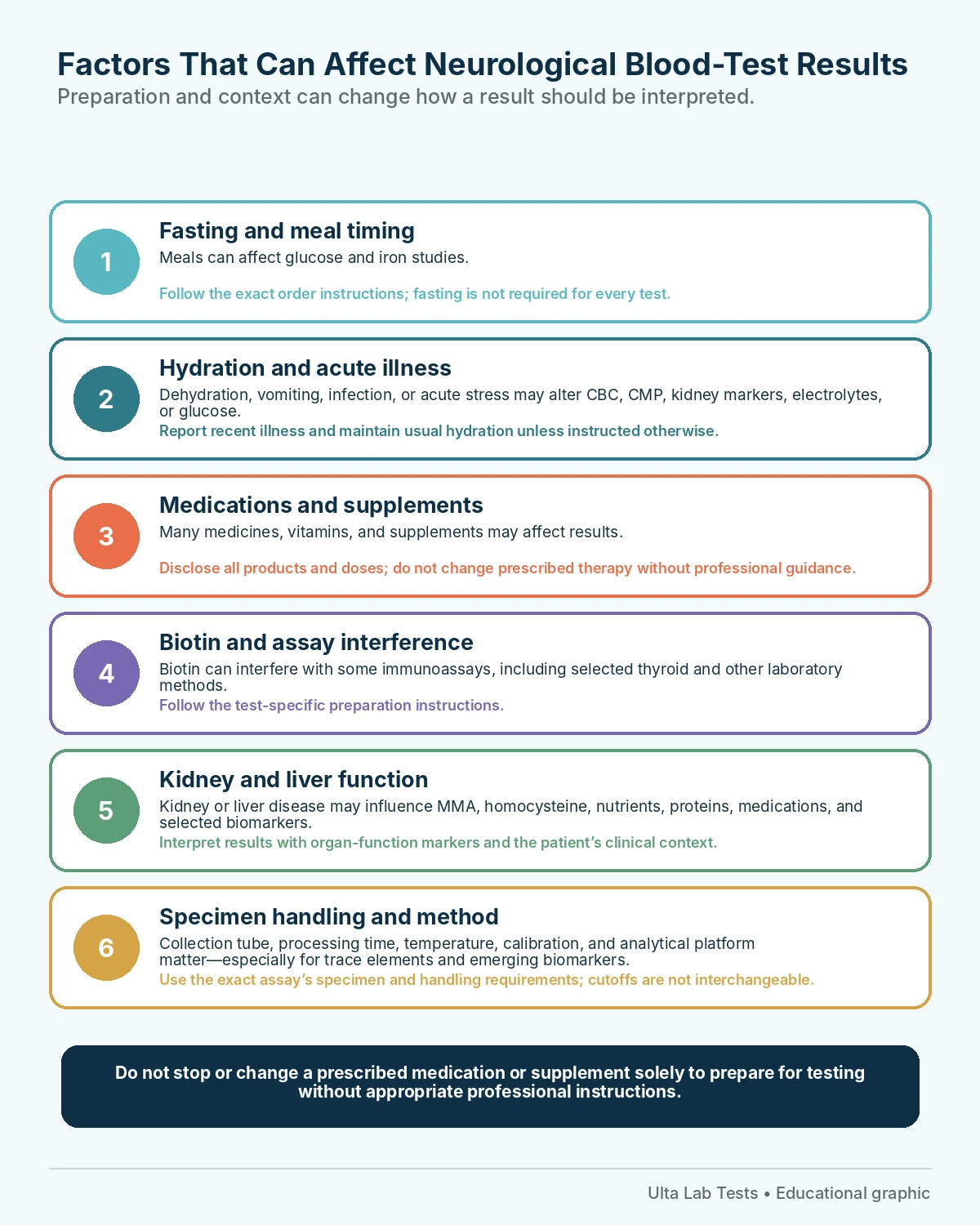
| Factor | Tests commonly affected | How the factor may alter results | General preparation guidance | Important caution |
|---|---|---|---|---|
| Food and fasting status | Glucose, some metabolic-panel components, iron measures, homocysteine, and selected vitamin tests. | Recent food may change the concentration or pattern and can make a result difficult to compare with a fasting result. | Follow exact product instructions and record whether collection was fasting and for how long. | Do not repeat a test solely because it was nonfasting unless the selected test or interpretation requires fasting. |
| Hydration | CBC concentrations, electrolytes, kidney-related measures, proteins, and collection quality. | Dehydration or excess fluid can change measured concentrations. | Use usual hydration unless the product or clinician gives different instructions. | Fluid restriction or loading may be unsafe in some medical conditions. |
| Biotin | Some immunoassays, including selected thyroid and hormone methods. | Interference can cause falsely high or falsely low results, depending on the assay design. | Disclose product, dose, and timing. | Do not stop a prescribed product without professional guidance. |
| Vitamin injections or supplements | Vitamin B12, folate, B6, thiamine, copper, magnesium, and functional markers. | Recent exposure can raise measured concentrations or obscure a deficiency pattern. | Report the product, dose, route, and last use. | Do not change medically recommended supplements solely to alter a laboratory number. |
| Acute illness, inflammation, or injury | CBC, ferritin, CRP, ESR, glucose, metabolic measures, and some biomarkers. | Temporary physiological changes may create an acute-phase or stress pattern. | Ask whether testing should occur now or after recovery. | Urgent clinical needs take priority over ideal testing conditions. |
| Kidney function | MMA, homocysteine, electrolytes, magnesium, and selected neurological biomarkers. | Reduced clearance or altered physiology can change concentrations and predictive performance. | Interpret affected analytes with kidney-related measures and context. | A high result may not have the same meaning when kidney function is reduced. |
| Pregnancy, transfusion, blood loss, or altered red-cell lifespan | CBC, A1C, iron measures, and some reference intervals. | Physiology or changed red-cell turnover can alter results. | Provide timing and context; another test or repeat interval may be appropriate. | Use pregnancy-specific professional care for urgent symptoms or abnormal results. |
| Specimen collection and handling | Trace elements, glucose, ratios, protein studies, and emerging biomarkers. | Incorrect tubes, processing, storage, transport, or contamination can invalidate results. | Use the exact collection and handling requirements for the assay. | Preanalytical errors cannot always be corrected by interpretation. |
A medicine may influence a result and still be medically necessary. Report prescription and nonprescription products, including thyroid medicine, metformin, acid-suppressing medicine, diuretics, corticosteroids, lithium, amiodarone, antiseizure medicine, vitamins, minerals, and herbal products. A qualified healthcare professional should decide whether timing, temporary withholding, or repeat testing is appropriate.
Use the reference interval printed on the actual laboratory report. Intervals can differ by method, specimen, age, sex, pregnancy status, and laboratory. A flag means a result falls outside that laboratory interval; it does not automatically identify the cause, severity, or treatment. Review the broader framework in How to Read and Understand Your Lab Results.
| Step | What to review | Question to ask |
|---|---|---|
| 1. Confirm identity and conditions | Patient, date, specimen, fasting status, medicines, supplements, and recent illness. | Was this the intended test collected under the intended conditions? |
| 2. Use the report interval | Value, units, reference interval, flags, comments, and reflex results. | Is the finding outside the method-specific range, and is a decision threshold different? |
| 3. Interpret the pattern | Related analytes, symptom timing, examination, prior results, and relevant conditions. | Does the result fit the rest of the clinical picture? |
| 4. Assess certainty | Biological variation, analytical limitations, pretest probability, and possible interference. | Could the finding be transient, incidental, or misleading? |
| 5. Decide the next action | Repeat, confirm, monitor, refer, image, treat a verified contributor, or take no action. | What decision changes because of this result? |
| Term | What it means | How it is used | Why it may differ | Patient caution |
|---|---|---|---|---|
| Laboratory reference interval | The range containing most results in a defined comparison population using a specific method. | Flags results that fall outside that laboratory range. | Population, specimen, method, age, sex, and pregnancy status can differ. | Outside range does not automatically mean disease; inside range does not guarantee health. |
| Screening cutoff | A value selected to identify people who may need further evaluation. | Balances sensitivity and specificity for a defined screening purpose. | Guidelines, population risk, method, and consequence of missed cases vary. | A screening result often needs confirmation. |
| Diagnostic decision threshold | A value or rule used with clinical criteria to support a diagnosis. | Helps classify a defined clinical condition. | Thresholds may be evidence-based, assay-specific, and context-specific. | A threshold is not automatically a treatment target or universal reference range. |
| Monitoring or treatment target | A goal used during management of a known condition. | Tracks response, safety, or risk reduction. | The condition, treatment, guideline, and patient factors differ. | Do not change therapy based on a target without the prescribing professional. |
Educational example only - not a diagnosis and not a universal reference range. Consider a fictional adult with gradually progressive numbness in both feet and concerns about concentration. The history identifies long-term metformin use and a borderline vitamin B12 result.
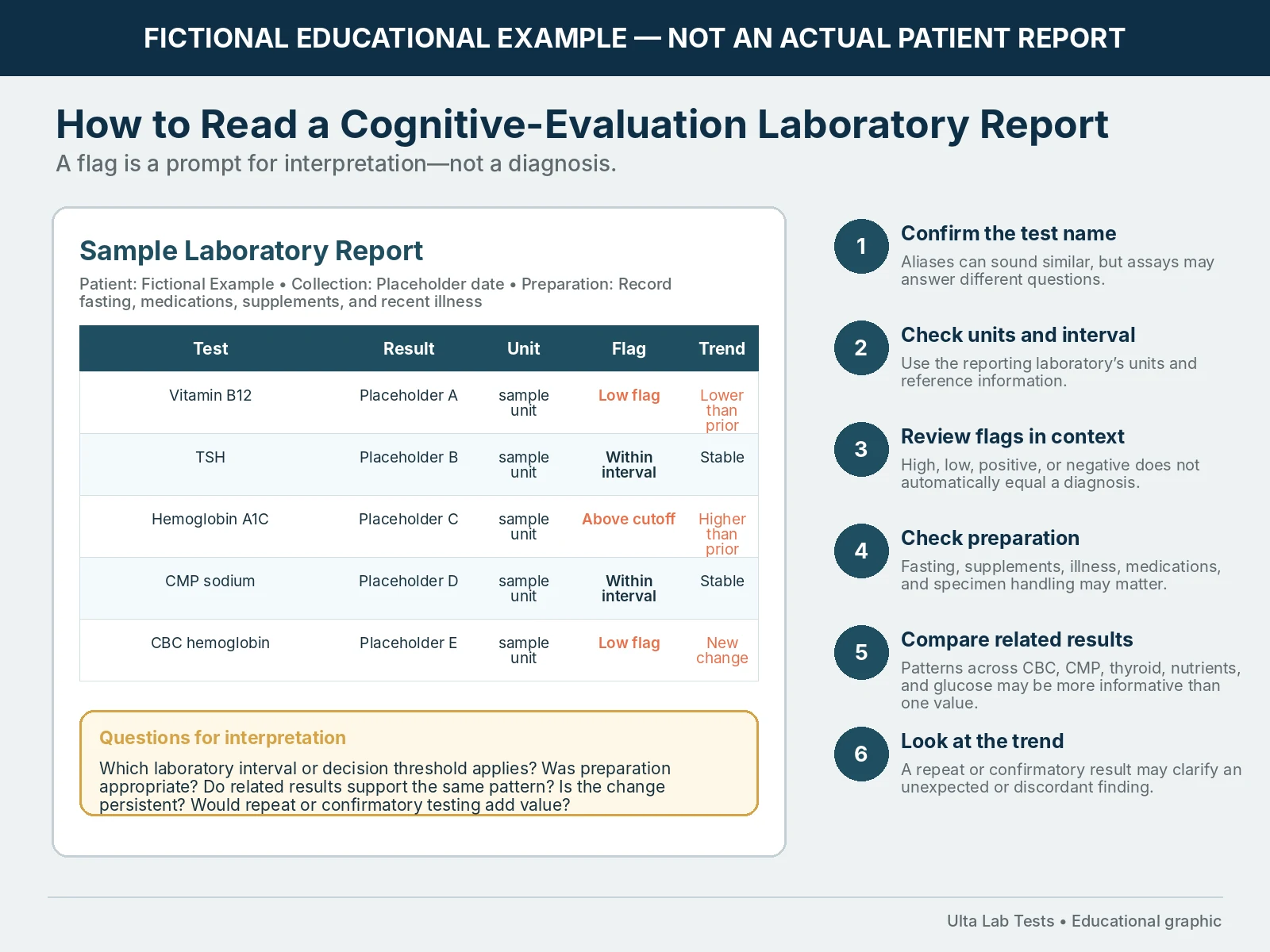
| Report element | Fictional pattern | Interpretation question |
|---|---|---|
| Symptoms and timeline | Gradually progressive symmetric numbness in both feet; no acute weakness or emergency warning sign. | Does the pattern fit a length-dependent peripheral neuropathy, and what examination is needed? |
| Vitamin B12 | Borderline according to the reporting laboratory. | Could supplements, binding proteins, diet, surgery, medicines, or method affect the result? |
| Methylmalonic acid | Ordered as a functional marker; result interpreted with kidney function. | Does the result add support for impaired B12-dependent metabolism? |
| CBC and metabolic context | Blood count, glucose regulation, electrolytes, kidney-related measures, and liver-related measures reviewed together. | Are there related patterns or alternative contributors? |
| Nonlaboratory evaluation | Neurological examination and assessment of sensation, strength, gait, reflexes, and foot safety. | Does the examination support neuropathy, and is electrodiagnostic testing needed? |
| Next step | Confirm the clinically relevant pattern and address the cause under professional guidance. | Would repeat testing, treatment of a verified deficiency, medication review, or referral change care? |
An elevated functional marker could support B12 deficiency in context, but it would not prove that every symptom is caused by that deficiency or that nerve injury will fully reverse.
More testing is not always better. A test may be low value when it cannot answer the clinical question, is collected under conditions that make it uninterpretable, or will not change the next step.
| Situation | Why to pause | Better next step |
|---|---|---|
| New emergency neurological symptoms | Routine laboratory turnaround can delay time-sensitive diagnosis and treatment. | Call 911 or seek emergency evaluation. |
| No defined symptom, risk, or decision | Broad screening increases incidental findings, false positives, anxiety, and unnecessary follow-up. | Clarify the goal and pretest probability before choosing a test. |
| A question that requires imaging, examination, or electrical studies | A blood marker cannot answer the structural or functional question. | Arrange the appropriate clinical evaluation. |
| Repeating a stable result too soon | The expected biological change may be smaller than normal variation. | Use an interval based on the analyte, treatment, symptoms, and clinical plan. |
| Alzheimer biomarker testing in an asymptomatic person without a validated pathway | Predictive meaning may be uncertain and downstream care may be inappropriate. | Discuss risk, cognition, family history, counseling, and intended use with a qualified professional. |
| Genetic testing without consent or counseling | Results can have emotional, privacy, insurance, and family implications. | Establish informed consent and a pretest plan for interpretation and disclosure. |
| Testing during an acute illness when the question can safely wait | Temporary physiology may obscure the baseline pattern. | Ask whether testing should be postponed until recovery. |
An unexpected result may need confirmation when it conflicts with symptoms, may have been influenced by collection conditions or supplements, lies close to a decision threshold, or would trigger a significant diagnosis or treatment. Repeat timing should reflect urgency, analyte biology, treatment exposure, and whether the same method or a different method is needed. Do not repeat a test automatically without deciding what a changed or unchanged result would mean.
Call 911 for symptoms that may signal stroke, hemorrhage, seizure, meningitis, severe metabolic disturbance, spinal-cord compression, or another emergency. Warning signs include:
Do not drive yourself when symptoms could impair vision, awareness, strength, coordination, or judgment.
These links are organized by the clinical question they may help address. A product link does not mean a test should be ordered without a defined reason.
Eligible patients may be able to review available laboratory tests online, compare the exact listed products, follow the preparation instructions for the selected test, complete collection through the available process, receive results through an online account, and use those results to support a more informed professional conversation. Access does not make every test appropriate or self-explanatory. Review how direct-access lab testing works and what to expect before ordering.
Choose the exact test that matches the question, review the current product page immediately before ordering, and arrange clinical follow-up for urgent, unexpected, borderline, or potentially significant findings.
A focused evaluation often considers a blood count, metabolic panel, glucose regulation, thyroid function, and vitamin B12 status, with additional tests selected from the history and examination. Blood tests do not replace cognitive assessment, medication review, or imaging when indicated.
Yes. Deficiencies involving vitamin B12, thiamine, folate, copper, or other nutrients can contribute to cognitive, sensory, gait, blood-count, or systemic findings. Symptoms overlap with many conditions, so the result must be interpreted with diet, absorption risk, medications, supplements, examination, and related markers.
Migraine is usually diagnosed clinically. Routine broad blood testing is not required for a typical, stable pattern with a normal examination. Targeted tests may be appropriate when the history suggests anemia, metabolic disturbance, pregnancy-related risk, infection, inflammation, medication effects, or another secondary contributor.
Selection depends on the pattern. High-yield questions often include glucose dysregulation, vitamin B12 deficiency with functional confirmation when needed, and a monoclonal-protein evaluation in selected distal symmetric neuropathies. Thyroid, nutrient, toxic, autoimmune, infectious, or genetic tests may be added when supported by the presentation.
Not always. A borderline or clinically discordant result may need methylmalonic acid and review of kidney function, supplements, injections, blood-count findings, symptoms, and laboratory method.
No. They are nonspecific systemic inflammation markers. They may be useful when a defined inflammatory, infectious, vascular, malignant, or rheumatologic process is plausible, but they do not diagnose migraine, dementia, autoimmune disease, or a general concept of brain inflammation.
No result should be used as a stand-alone diagnosis. A suitable assay may support a structured diagnostic workup in a symptomatic person, but it must be interpreted with cognition, function, examination, pretest probability, comorbidities, and any needed confirmation.
APOE genotype is an inherited susceptibility marker. Plasma p-tau and amyloid-related tests measure biological signals associated with current pathology. The tests answer different questions and have different counseling and confirmation needs.
Current clinical guidance does not support broad population screening with these tests. An asymptomatic person should first discuss the reason for testing, family history, limitations, psychological and privacy implications, and whether a validated pathway exists.
No. The relevant contributors depend on the symptom pattern, risks, medications, diet, examination, and setting. A large panel can miss nonlaboratory causes while increasing incidental findings and false positives.
Repeat testing may be useful when a result is unexpected, borderline, inconsistent with symptoms, affected by preparation or interference, used to monitor a known condition, or important enough to confirm before a major decision. Timing should match the analyte and clinical plan.
Review the actual report, units, reference interval, preparation conditions, medicines, supplements, related results, and symptoms. Seek prompt clinical advice for a critical result, significant new symptoms, or a finding that may require confirmation or treatment. Do not start, stop, or change a prescription based on one online result.
The most effective neurological blood-testing strategy is focused, staged, and connected to a next step. Begin with urgent-symptom triage, define the symptom pattern, assess common and potentially reversible contributors when appropriate, and add targeted or specialist-directed testing only when the result can change care. Blood testing may identify important systemic contributors, but it cannot replace neurological examination, cognitive assessment, imaging, electrical studies, cerebrospinal-fluid testing, counseling, or specialist evaluation. Emerging Alzheimer biomarkers can be valuable in an appropriate symptomatic pathway, but assay identity, performance, pretest probability, comorbidities, counseling, and confirmation remain essential.
Written by: John R.
Update history: Originally published August 1, 2026. Substantively updated August 11, 2026 to align images with their explanatory sections, strengthen the patient decision pathway, preserve linked Ulta test names, update the FDA recall date, improve cornerstone and sibling-pillar navigation, and complete spelling, symbol, encoding, and sentence-spacing review.
Commercial disclosure: Ulta Lab Tests offers laboratory-testing services and may link to tests or panels discussed on this page. This content is educational and does not provide individual diagnosis or treatment.
Medical note: A qualified professional should select and interpret testing in the context of symptoms, diagnoses, medications, pregnancy status, nutrition, hydration, examination findings, and prior results. Do not start, stop, increase, decrease, or change a prescription medication or supplement because of this article or one laboratory result.

Ulta Lab Tests, LLC.
9237 E Via de Ventura, Suite 220
Scottsdale, AZ 85258
480-681-4081
(Toll Free: 800-714-0424)