
96 Food Sensitivity IgG FingerStick Test Kit
The 96 Food Sensitivity IgG FingerStick Test measures immune reactivity to 96 common foods. By evaluating IgG antibody responses, it helps identify potential food sensitivities that may contribute to delayed or subtle symptoms. Results provide structured insights to guide dietary adjustments and support informed discussions with healthcare providers for improved wellness strategies.
- $241
The following is a list of what is included in the item above. Click the test(s) below to view what biomarkers are measured along with an explanation of what the biomarker is measuring.
The 96 Food Sensitivity IgG FingerStick Test Kit test contains 1 test .
What Is the 96 Food Sensitivity IgG FingerStick Test Kit?

The 96 Food Sensitivity IgG FingerStick Test is designed to evaluate immune reactivity to 96 common foods by measuring IgG antibody levels. Food sensitivities are distinct from food allergies and intolerances, often manifesting in delayed or subtle ways that can make them difficult to identify without testing. By analyzing IgG antibody responses, this test provides an evidence-based approach to understanding how the immune system reacts to specific foods, offering valuable insights into individualized nutrition and wellness strategies. With a simple at-home fingerstick collection, individuals can gain a clearer picture of potential food-related triggers, supporting more informed conversations with healthcare providers and empowering better dietary decisions.
| Disclaimer: IgG testing is not diagnostic of food allergies, intolerances, or disease. Results should always be interpreted with a qualified healthcare provider. |
Testing Method: Enzyme-Linked Immunosorbent Assay
Collection Method: Fingerstick Lancet 
Specimen Type: Blood Droplets 

Test Preparation: No preparation required
When and Why Someone Would Order This Test
Food-related issues can be complex and may not always present as immediate or obvious symptoms. Many people consider a food sensitivity test when they experience ongoing or unexplained concerns such as bloating, digestive discomfort, fatigue, skin irritation, joint stiffness, or low-grade inflammation that may be linked to diet. Unlike food allergies, which can cause rapid and sometimes severe reactions, food sensitivities often produce delayed responses, making them challenging to pinpoint through observation alone.
This test is frequently considered by individuals who:
-
Experience persistent digestive issues such as gas, abdominal discomfort, or irregular bowel patterns.
-
Have chronic skin conditions, including rashes or unexplained flare-ups.
-
Notice changes in energy levels, focus, or mood after meals.
-
Seek insights into dietary factors that may influence headaches, joint discomfort, or overall inflammation.
-
Want to explore whether certain foods may play a role in weight management difficulties or general wellness concerns.
By providing an organized assessment of IgG responses, this test helps patients and healthcare providers take a structured approach to identifying patterns, guiding dietary adjustments, and monitoring potential improvements in symptoms or overall wellbeing.
What Does the Test Measure
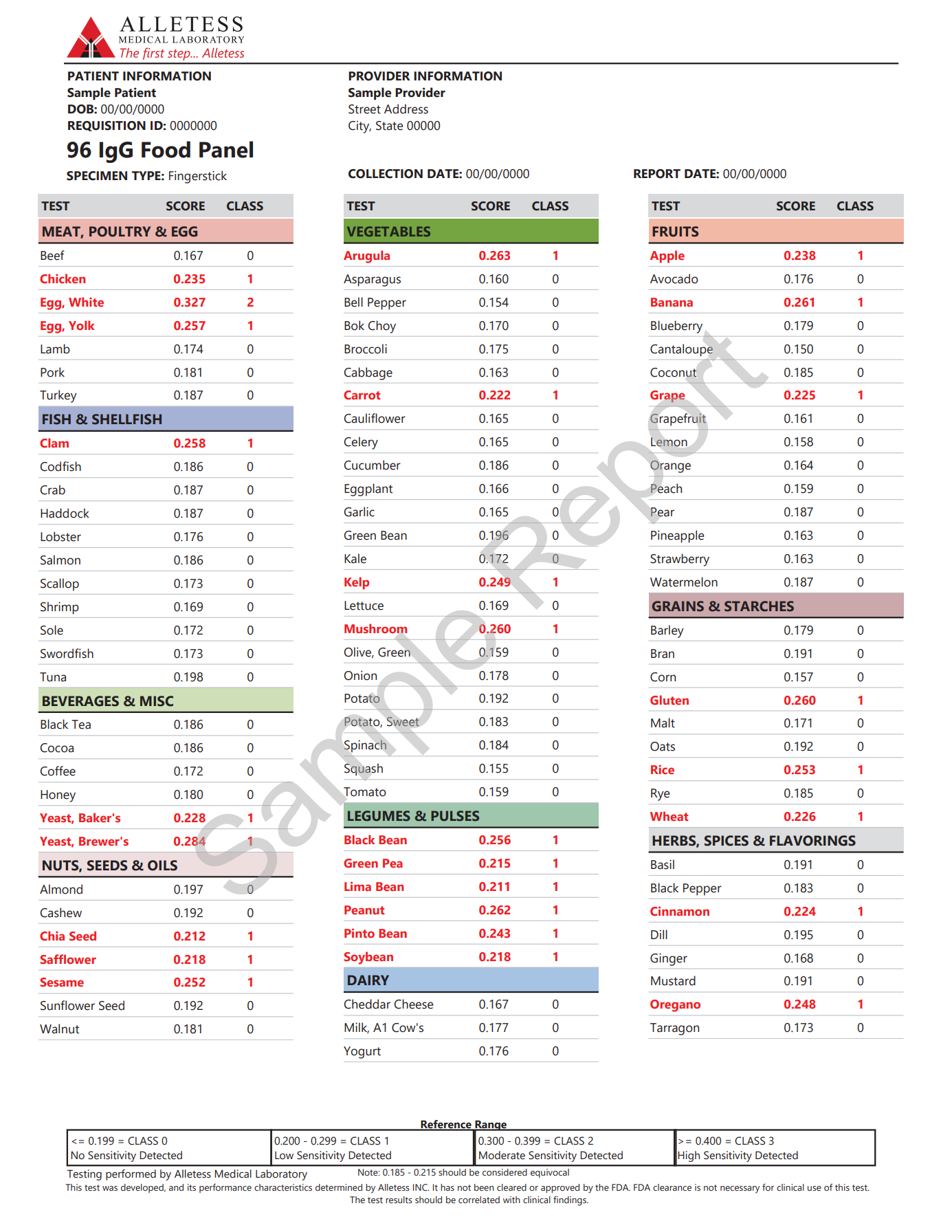
The 96 Food Sensitivity IgG FingerStick Test measures IgG antibodies produced by the immune system in response to specific foods. Elevated IgG levels can indicate heightened immune recognition of a food, suggesting that it may contribute to sensitivity-type reactions.
| MEAT, POULTRY, AND EGG | VEGETABLES | FRUITS | ||||
| Beef | Arugula | Apple | ||||
| Chicken | Asparagus | Avocado | ||||
| Egg, White | Bell Pepper | Banana | ||||
| Egg, Yolk | Bok Choy | Blueberry | ||||
| Lamb | Broccoli | Cantaloupe | ||||
| Pork | Cabbage | Coconut | ||||
| Turkey | Carrot | Grape | ||||
| Cauliflower | Grapefruit | |||||
| FISH AND SHELLFISH | Celery | Lemon | ||||
| Clam | Cucumber | Orange | ||||
| Codfish | Eggplant | Peach | ||||
| Crab | Garlic | Pear | ||||
| Haddock | Green Bean | Pineapple | ||||
| Lobster | Kale | Strawberry | ||||
| Salmon | Kelp | Watermelon | ||||
| Scallop | Lettuce | |||||
| Shrimp | Mushroom | GRAINS and STARCHES | ||||
| Sole | Olive, Green |
Barley |
||||
| Swordfish | Onion | Bran | ||||
| Tuna | Potato | Corn | ||||
| Potato, Sweet | Gluten | |||||
| BEVERAGES AND MISC | Spinach | Malt | ||||
| Black Tea | Squash | Oats | ||||
| Cocoa | Tomato | Rice | ||||
| Coffee | Rye | |||||
| Honey | LEGUMES AND PULSES | Wheat | ||||
| Yeast, Baker's | Black Bean | |||||
| Yeast, Brewer's | Grean Pea | HERBS, SPICES AND FLAVORINGS | ||||
| Lima Bean | Basil | |||||
| NUTS, SEEDS AND OILS | Peanut | Black Pepper | ||||
| Almond | Pinto Bean | Cinnamon | ||||
| Cashew | Soybean | Dill | ||||
| Chia Seed | Ginger | |||||
| Safflower | DAIRY | Mustard | ||||
| Sesame | Cheddar Cheese | Oregano | ||||
| Sunflower Seed | Milk, A1 Cow's | Tarragon | ||||
| Walnut | Yogurt |
Food Sensitivity vs. Food Allergy vs. Food Intolerance
Understanding the differences between food sensitivity, food allergy, and food intolerance is essential:
-
Food Sensitivity (IgG): This test evaluates IgG antibodies, which are associated with delayed immune responses to foods. Symptoms may appear hours or even days after exposure, making them harder to track. Food sensitivities do not carry the immediate, potentially life-threatening risks associated with allergies.
-
Food Allergy (IgE): Allergies involve IgE antibodies and typically produce immediate reactions such as hives, swelling, difficulty breathing, or anaphylaxis. Allergy testing is distinct from sensitivity testing and must be conducted under medical supervision.
-
Food Intolerance: Intolerances do not involve the immune system but result from difficulties digesting certain foods (e.g., lactose intolerance). Symptoms often include bloating, cramps, or diarrhea soon after ingestion.
It is important to emphasize that the 96 Food Sensitivity IgG FingerStick Test is not a diagnostic tool for food allergies or intolerances. Instead, it provides insights into IgG-mediated food sensitivities, which may help guide dietary exploration in collaboration with a healthcare provider.
How Are the Results of the Test Used
The results from the 96 Food Sensitivity IgG FingerStick Test can be a valuable resource for individuals and healthcare providers seeking to better understand dietary influences on wellness. A report categorizing foods by IgG reactivity levels provides structured data, making it easier to identify which foods may warrant temporary elimination, rotation, or closer observation.
Healthcare providers may use the results to:
-
Recommend elimination or rotation diets based on test findings.
-
Correlate reported symptoms with immune reactivity patterns.
-
Develop personalized nutrition strategies aimed at improving digestion, energy, and overall wellbeing.
-
Monitor changes in immune reactivity over time with follow-up assessments.
For individuals, the test results offer a starting point for discussions with healthcare professionals. Rather than relying solely on trial-and-error dietary changes, patients can make more focused adjustments and observe potential improvements. This data-driven approach can help reduce uncertainty, encourage structured experimentation, and support long-term dietary balance.
Consider the 184 Food Sensitivity IgG FingerStick Test
For those seeking a broader evaluation, the 184 Food Sensitivity IgG FingerStick Test provides a more comprehensive assessment of IgG reactivity to a wider range of foods. While the 96-panel test covers many common dietary items, the 184-panel expands this scope, including additional proteins, grains, vegetables, and specialty foods.
Individuals who consume a diverse diet, follow specialized meal plans, or wish to gain the most thorough overview of possible food sensitivities may find the 184-panel particularly valuable. It allows for a deeper exploration of potential dietary triggers and supports more personalized nutrition strategies. Considering the 184-panel test alongside or after the 96-panel test may offer additional clarity for those who want the most detailed insights available.
Conclusion
The 96 Food Sensitivity IgG FingerStick Test provides an evidence-based tool for exploring how the immune system responds to common foods. By measuring IgG antibodies to 96 dietary items, this test offers structured insights that can help guide dietary decisions in collaboration with healthcare providers. It does not diagnose food allergies or intolerances but instead highlights immune recognition patterns that may contribute to delayed or subtle food-related concerns.
With results in hand, individuals gain a clearer path to structured dietary adjustments, reduced uncertainty, and more productive discussions with healthcare professionals. Whether used as an initial screening tool or as part of a broader wellness strategy, this test supports an informed approach to understanding how diet may influence health and wellbeing.