
205 Food Sensitivity IgG FingerStick Test Kit with Wellness Plan
The 205 Food Sensitivity IgG FingerStick Test with Wellness Plan measures immune reactivity to 205 foods and pairs results with structured guidance for dietary change. This bundle combines the most comprehensive IgG test panel with a personalized program, empowering healthcare providers and patients to turn results into practical nutrition strategies for long-term, evidence-based wellness.
- $625
The following is a list of what is included in the item above. Click the test(s) below to view what biomarkers are measured along with an explanation of what the biomarker is measuring.
The 205 Food Sensitivity IgG FingerStick Test Kit with Wellness Plan test contains 1 test .

What Is the 205 Food Sensitivity IgG FingerStick Test Kit with Wellness Plan?
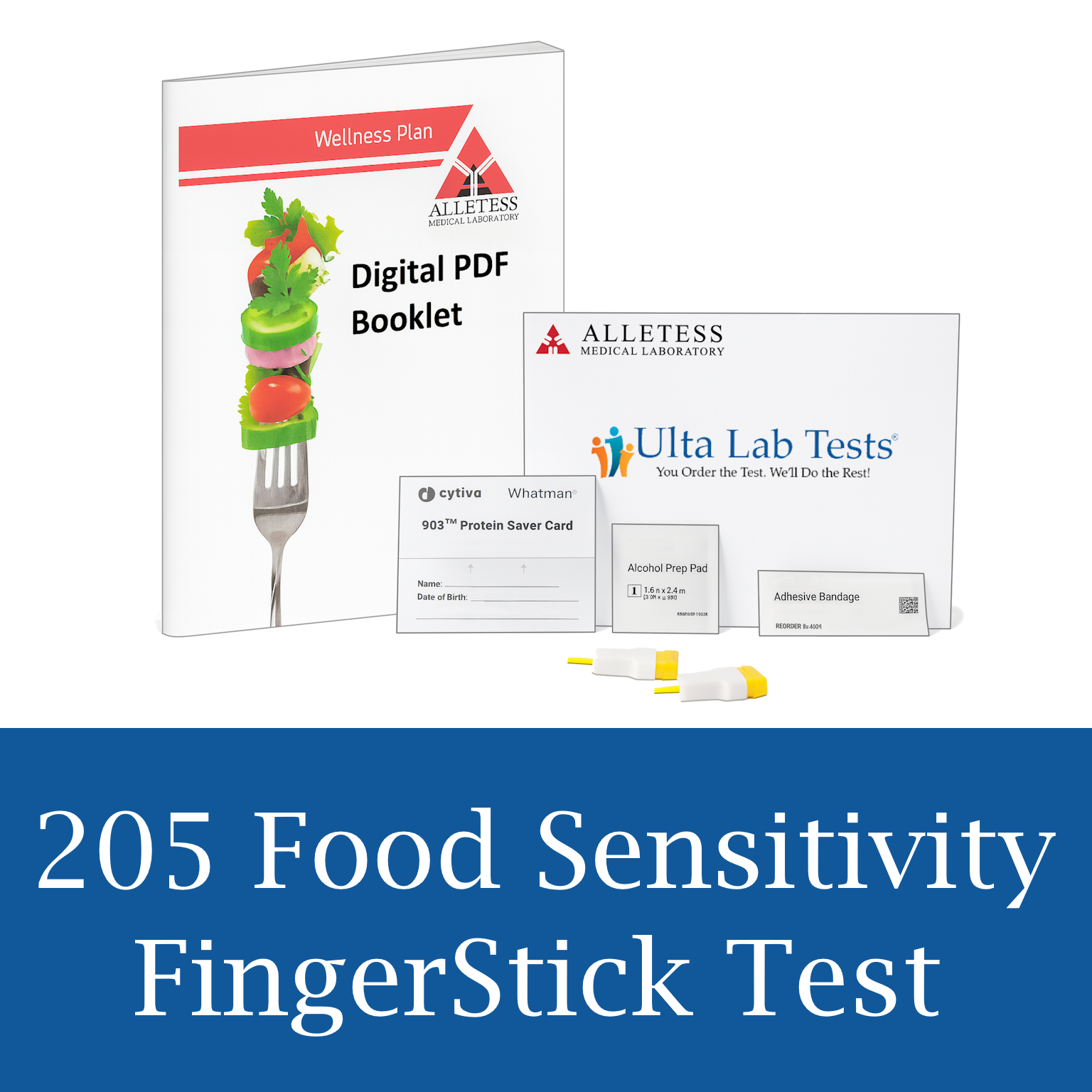 The 205 Food Sensitivity IgG FingerStick Test with Wellness Plan is the most comprehensive package available for evaluating immune reactivity to food. This test measures IgG antibody responses to 205 different foods, offering the widest coverage of dietary proteins, grains, vegetables, fruits, nuts, seeds, herbs, and spices. Food sensitivities may contribute to delayed or subtle responses that can be difficult to identify without structured testing. By combining the extensive test panel with a Wellness Plan, this bundle transforms raw data into actionable strategies for dietary adjustments. The Wellness Plan provides structured, evidence-informed guidance to help interpret results and apply them in daily life, bridging the gap between lab findings and practical nutrition. Together, the test and plan empower patients and healthcare providers with insights and tools to pursue personalized and sustainable approaches to wellness.
| Disclaimer: IgG testing is not diagnostic of food allergies, intolerances, or disease. Results should always be interpreted with a qualified healthcare provider. |
Testing Method: Enzyme-Linked Immunosorbent Assay
Collection Method: Fingerstick Lancet 
Specimen Type: Blood Droplets 

Test Preparation: No preparation required
When and Why Someone Would Order This Test
Food sensitivities can manifest in ways that are not always immediate or obvious, making them difficult to connect with specific foods. IgG responses often occur hours or even days after consumption, which can make it hard to recognize the connection without structured testing. The 205 Food Sensitivity IgG FingerStick Test with Wellness Plan provides maximum coverage, making it especially valuable for individuals with diverse or international diets or for those who want the most thorough assessment in one step.
This test may be considered by individuals who:
-
Experience ongoing digestive discomfort, such as bloating, gas, or irregularity.
-
Notice skin issues, rashes, or breakouts that appear inconsistently.
-
Report chronic fatigue, energy fluctuations, or “brain fog” related to meals.
-
Deal with headaches, inflammation, or joint stiffness without clear triggers.
-
Want comprehensive insights after trying smaller food panels with limited answers.
-
Prefer a complete overview that reduces the possibility of missing relevant foods.
Paired with the Wellness Plan, the bundle doesn’t just identify possible IgG food sensitivities—it also provides structured, practical guidance to make changes easier and more effective.
What Does the Test Measure
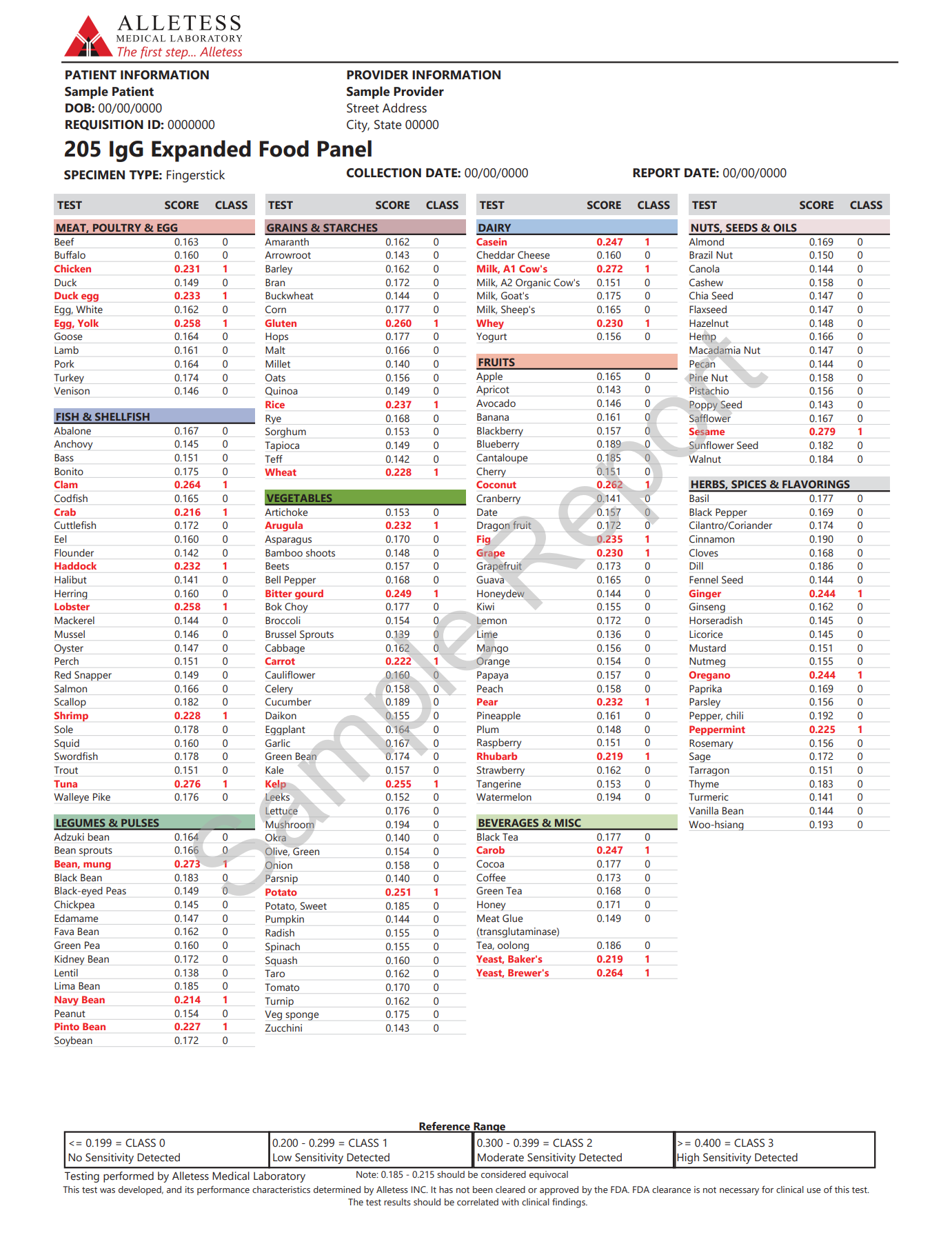
The 205 Food Sensitivity IgG FingerStick Test measures IgG antibodies, proteins produced by the immune system in response to food antigens. Elevated IgG reactivity suggests immune recognition that may be associated with delayed sensitivity-type responses.
This expanded test covers an extensive range of foods across all major dietary categories.
| MEAT, POULTRY AND EGG | GRAINS AND STARCHES | DAIRY | NUTS, SEEDS AND OILS | |||||
| Beef | Amaranth | Casein | Almond | |||||
| Buffalo | Arrowroot | Cheddar Chease | Brazil Nut | |||||
| Chicken | Barley | Milk, A1 Cow's | Canola | |||||
| Duck | Bran | Milk, A2 Organic Cow's | Cashew | |||||
| Duck Egg | Buckwheat | Milk, Goats | Chia Seed | |||||
| Egg, White | Corn | Milk, Sheep's | Flaxseed | |||||
| Egg, Yolk | Gluten | Whey | Hazelnut | |||||
| Goose | Hops | Yogurt | Hemp | |||||
| Lamb | Malt | Macadamia Nut | ||||||
| Pork | Millet | FRUITS | Pecan | |||||
| Turkey | Oats | Apple | Pine Nut | |||||
| Venison | Quinoa | Apricot | Pistachio | |||||
| Rice | Avocado | Poppy Seed | ||||||
| FISH AND SHELLFISH | Rye | Banana | Safflower | |||||
| Abalone | Sorghum | Blackberry | Sesame | |||||
| Anchovy | Tapioca | Cantaloupe | Sunflower Seed | |||||
| Bass | Teff | Cherry | Walnut | |||||
| Bonito | Wheat | Coconut | ||||||
| Clam | Cranberry | HERBS, SPICES AND FLAVORINGS | ||||||
| Codfish | VEGETABLES | Date | Basil | |||||
| Crab | Artichoke | Dragon Fruit | Black Pepper | |||||
| Cuttlefish | Arrugula | Fig | Cilantro/Coriander | |||||
| Eel | Asparagus | Grape | Cinnamon | |||||
| Flounder | Bamboo Shoots | Grapefruit | Cloves | |||||
| Haddock | Beets | Guava | Dill | |||||
| Halibut | Bitter Gourd | Honeydew | Fennel Seed | |||||
| Herring | Bok Choy | Kiwi | Ginger | |||||
| Lobster | Broccoli | Lemon | Ginseng | |||||
| Mackerel | Brussel Sprouts | Lime | Horseradish | |||||
| Mussel | Cabbage | Mango | Licorice | |||||
| Oyster | Carrot | Orange | Mustard | |||||
| Perch | Cauliflower | Papaya | Nutmeg | |||||
| Red Snapper | Celery | Peach | Oregano | |||||
| Salmon | Cucumber | Pear | Paprika | |||||
| Scallop | Daikon | Pineapple | Parsley | |||||
| Shrimp | Eggplant | Plum | Pepper, Chili | |||||
| Sole | Garlic | Raspberry | Peppermint | |||||
| Squid | Green Bean | Rhubarb | Rosemary | |||||
| Swordfish | Kale | Strawberry | Sage | |||||
| Trout | Kelp | Tangerine | Tarragon | |||||
| Tuna | Leeks | Watermelon | Thyme | |||||
| Walleye Pike | Lettuce | Turmeric | ||||||
| Mushroom | BEVERAGES AND MISC | Vanilla Bean | ||||||
| LEGUMES AND PULSES | Okra | Black Tea | Woo-Hsiang | |||||
| Adzuki Bean | Olive, Green | Carob | ||||||
| Bean Sprouts | Onion | Cocoa | ||||||
| Bean, Mung | Parsnip | Coffee | ||||||
| Black Bean | Potato | Green Tea | ||||||
| Black-eyed Peas | Potato, Sweet | Honey | ||||||
| Chickpea | Pumpkin | Meat Glue | ||||||
| Edamame | Radish | Tea, Oolong | ||||||
| Fava Bean | Spinach | Yeast, Baker's | ||||||
| Grean Pea | Squash | Yeast, Brewer's | ||||||
| Kidney Bean | Taro | |||||||
| Lentil | Tomato | |||||||
| Lima Bean | Turnip | |||||||
| Navy Bean | Veg Sponge | |||||||
| Peanut | Zucchiini | |||||||
| Pinto Bean | ||||||||
| Soybean |
What is the Wellness Plan
The Wellness Plan is a structured program designed to help individuals apply test results to everyday life. It moves beyond identification of reactive foods and provides actionable strategies, education, and tools for sustainable dietary change. Without a clear plan, test results can feel overwhelming. The Wellness Plan helps translate findings into a manageable roadmap for nutritional balance.
Core elements of the Wellness Plan include:
-
Elimination and Rotation Guidance: Step-by-step methods for removing reactive foods and reintroducing them systematically.
-
Food Substitution Tips: Suggestions for alternatives that maintain nutrient balance and variety.
-
Tracking and Monitoring Tools: Resources for observing how dietary changes affect wellbeing over time.
-
Educational Resources: Easy-to-understand explanations of IgG sensitivities, empowering individuals to make informed decisions.
Pairing the Wellness Plan with the 205-panel test ensures that insights don’t stop at data. Instead, the results are integrated into a guided strategy that patients can follow, supported by healthcare providers.
Food Sensitivity vs. Food Allergy vs. Food Intolerance
It is important to understand what this test measures—and what it does not.
-
Food Sensitivity (IgG): Food sensitivities involve delayed immune responses mediated by IgG antibodies. Symptoms can appear hours or days after eating and are difficult to pinpoint without structured testing.
-
Food Allergy (IgE): Food allergies involve IgE antibodies and cause immediate reactions such as hives, swelling, or even anaphylaxis. These reactions require medical diagnosis and management.
-
Food Intolerance: Intolerances are not immune-related. They occur when the body cannot properly digest certain foods, such as in lactose intolerance. Symptoms are typically digestive and appear quickly after eating.
The 205 Food Sensitivity IgG FingerStick Test with Wellness Plan focuses solely on IgG-mediated responses. It does not diagnose food allergies or intolerances but provides structured insights into delayed immune reactivity that may be relevant to dietary planning.
How Patients and Healthcare Providers Use the Results
Food Sensitivity vs. Food Allergy vs. Food Intolerance
It is important to understand what this test measures—and what it does not.
-
Food Sensitivity (IgG): Food sensitivities involve delayed immune responses mediated by IgG antibodies. Symptoms can appear hours or days after eating and are difficult to pinpoint without structured testing.
-
Food Allergy (IgE): Food allergies involve IgE antibodies and cause immediate reactions such as hives, swelling, or even anaphylaxis. These reactions require medical diagnosis and management.
-
Food Intolerance: Intolerances are not immune-related. They occur when the body cannot properly digest certain foods, such as in lactose intolerance. Symptoms are typically digestive and appear quickly after eating.
The 205 Food Sensitivity IgG FingerStick Test with Wellness Plan focuses solely on IgG-mediated responses. It does not diagnose food allergies or intolerances but provides structured insights into delayed immune reactivity that may be relevant to dietary planning.
Conclusion
The 205 Food Sensitivity IgG FingerStick Test with Wellness Plan offers the most complete evaluation of IgG-mediated food sensitivities available. By measuring immune reactivity to 205 foods, it provides broad coverage across dietary categories, while the Wellness Plan ensures those results are transformed into meaningful, practical action.
This bundle does not diagnose food allergies or intolerances but highlights immune recognition patterns that may guide dietary exploration. Its strength lies in combining scientific testing with structured, supportive guidance, helping individuals and healthcare providers create a balanced and informed approach to nutrition. With the most expansive panel available, this bundle offers clarity, structure, and support for those seeking the fullest picture of food-related immune responses.