
205 Food Sensitivity IgG FingerStick Test Kit
The 205 Food Sensitivity IgG FingerStick Test evaluates immune reactivity to 205 foods, offering the most comprehensive IgG panel available. By measuring delayed IgG antibody responses, this test highlights potential food sensitivities across proteins, grains, fruits, vegetables, nuts, seeds, and spices, providing valuable insights for healthcare-guided dietary planning and individualized nutrition strategies.
- $550
The following is a list of what is included in the item above. Click the test(s) below to view what biomarkers are measured along with an explanation of what the biomarker is measuring.
The 205 Food Sensitivity IgG FingerStick Test Kit test contains 1 test .
What Is the 205 Food Sensitivity IgG FingerStick Test Kit?
 The 205 Food Sensitivity IgG FingerStick Test is the most comprehensive IgG food sensitivity panel available, designed to evaluate immune reactivity to 205 commonly consumed and culturally diverse foods. Food sensitivities can present as delayed or subtle immune responses, making them difficult to identify without structured testing. Unlike food allergies or intolerances, IgG-mediated sensitivities may develop hours or even days after consuming a food, which can complicate recognition through observation alone. By measuring IgG antibodies, this test offers a data-driven approach to uncovering potential dietary triggers, providing a broad foundation for discussions about nutrition and wellness. With its wide coverage, the 205-panel allows for an in-depth look at how the immune system interacts with an extensive range of foods, empowering individuals and healthcare providers to make more informed, personalized dietary decisions.
| Disclaimer: IgG testing is not diagnostic of food allergies, intolerances, or disease. Results should always be interpreted with a qualified healthcare provider. |
Testing Method: Enzyme-Linked Immunosorbent Assay
Collection Method: Fingerstick Lancet 
Specimen Type: Blood Droplets 

Test Preparation: No preparation required
When and Why Someone Would Order This Test
Many people consider food sensitivity testing when faced with unexplained or ongoing issues that seem linked to diet but are difficult to pinpoint. Unlike allergies, which are usually immediate and easy to identify, food sensitivities can cause delayed immune responses that may manifest in subtle or overlapping ways. The 205 Food Sensitivity IgG FingerStick Test provides the most complete view, covering an expansive range of foods—including common items, less frequent ingredients, and international options—that may play a role in overall health.
This test is often considered by individuals who:
-
Experience chronic digestive discomfort, bloating, or irregular bowel patterns.
-
Notice fluctuating energy levels, mood changes, or cognitive fog that may relate to meals.
-
Deal with recurrent skin irritation, rashes, or inflammation without clear causes.
-
Suffer from persistent joint stiffness, low-grade inflammation, or headaches.
-
Follow a varied diet, including international cuisines, and want a comprehensive overview.
-
Have already completed smaller food panels but seek broader coverage to leave fewer gaps.
The broader the food panel, the more likely it is to capture immune reactivity to specific foods in a diverse diet. The 205-panel provides this maximum coverage, making it a preferred choice for those who want the most thorough evaluation of IgG food sensitivities available.
What Does the Test Measure
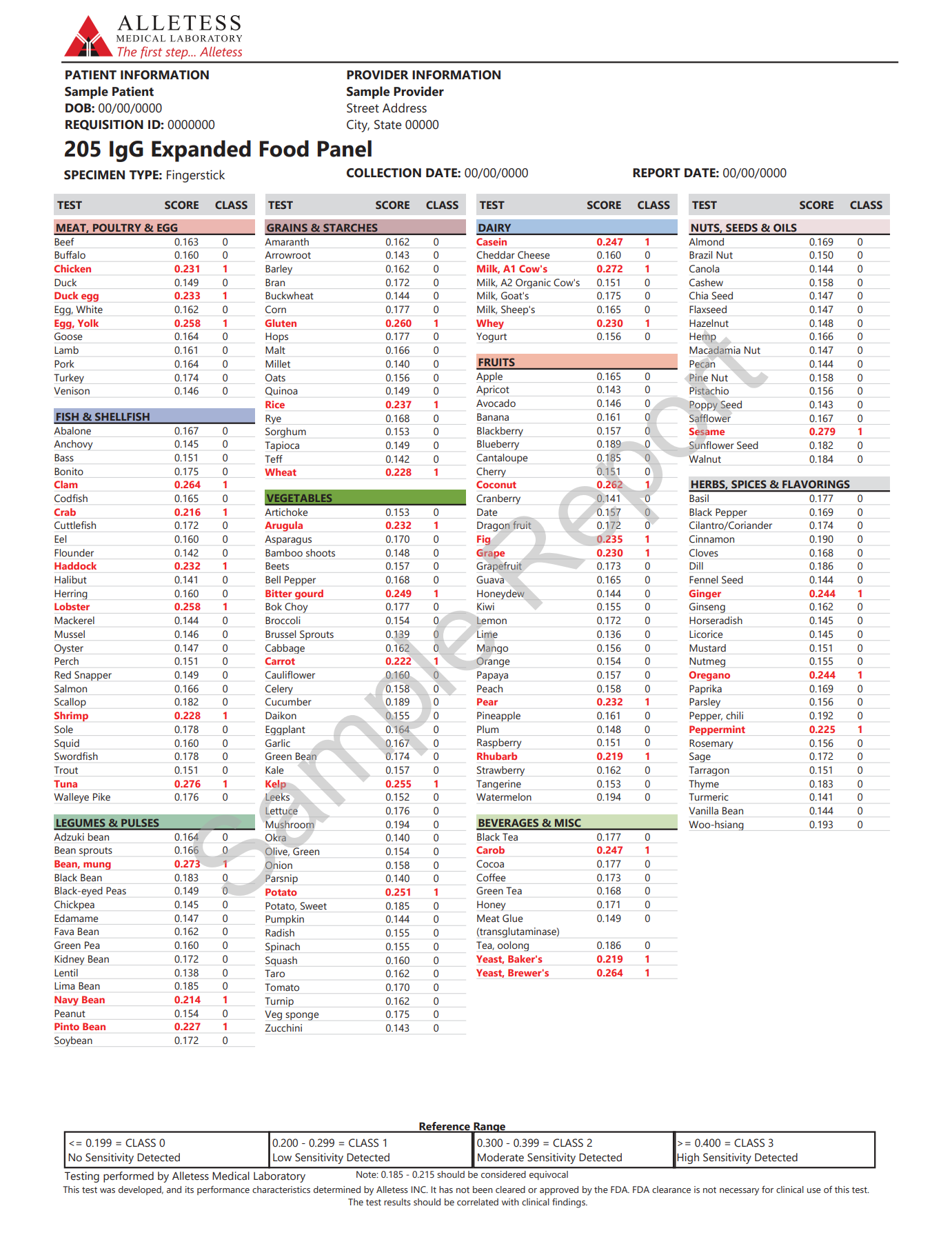
The 205 Food Sensitivity IgG FingerStick Test measures IgG antibodies, which are immune proteins that can recognize and bind to specific food antigens. Elevated IgG levels suggest that the immune system has been exposed to and reacted to those foods, potentially indicating sensitivity-type responses. Unlike IgE-mediated allergic reactions, IgG responses are typically delayed, often appearing hours or days after eating a particular food.
| MEAT, POULTRY AND EGG | GRAINS AND STARCHES | DAIRY | NUTS, SEEDS AND OILS | |||||
| Beef | Amaranth | Casein | Almond | |||||
| Buffalo | Arrowroot | Cheddar Chease | Brazil Nut | |||||
| Chicken | Barley | Milk, A1 Cow's | Canola | |||||
| Duck | Bran | Milk, A2 Organic Cow's | Cashew | |||||
| Duck Egg | Buckwheat | Milk, Goats | Chia Seed | |||||
| Egg, White | Corn | Milk, Sheep's | Flaxseed | |||||
| Egg, Yolk | Gluten | Whey | Hazelnut | |||||
| Goose | Hops | Yogurt | Hemp | |||||
| Lamb | Malt | Macadamia Nut | ||||||
| Pork | Millet | FRUITS | Pecan | |||||
| Turkey | Oats | Apple | Pine Nut | |||||
| Venison | Quinoa | Apricot | Pistachio | |||||
| Rice | Avocado | Poppy Seed | ||||||
| FISH AND SHELLFISH | Rye | Banana | Safflower | |||||
| Abalone | Sorghum | Blackberry | Sesame | |||||
| Anchovy | Tapioca | Cantaloupe | Sunflower Seed | |||||
| Bass | Teff | Cherry | Walnut | |||||
| Bonito | Wheat | Coconut | ||||||
| Clam | Cranberry | HERBS, SPICES AND FLAVORINGS | ||||||
| Codfish | VEGETABLES | Date | Basil | |||||
| Crab | Artichoke | Dragon Fruit | Black Pepper | |||||
| Cuttlefish | Arrugula | Fig | Cilantro/Coriander | |||||
| Eel | Asparagus | Grape | Cinnamon | |||||
| Flounder | Bamboo Shoots | Grapefruit | Cloves | |||||
| Haddock | Beets | Guava | Dill | |||||
| Halibut | Bitter Gourd | Honeydew | Fennel Seed | |||||
| Herring | Bok Choy | Kiwi | Ginger | |||||
| Lobster | Broccoli | Lemon | Ginseng | |||||
| Mackerel | Brussel Sprouts | Lime | Horseradish | |||||
| Mussel | Cabbage | Mango | Licorice | |||||
| Oyster | Carrot | Orange | Mustard | |||||
| Perch | Cauliflower | Papaya | Nutmeg | |||||
| Red Snapper | Celery | Peach | Oregano | |||||
| Salmon | Cucumber | Pear | Paprika | |||||
| Scallop | Daikon | Pineapple | Parsley | |||||
| Shrimp | Eggplant | Plum | Pepper, Chili | |||||
| Sole | Garlic | Raspberry | Peppermint | |||||
| Squid | Green Bean | Rhubarb | Rosemary | |||||
| Swordfish | Kale | Strawberry | Sage | |||||
| Trout | Kelp | Tangerine | Tarragon | |||||
| Tuna | Leeks | Watermelon | Thyme | |||||
| Walleye Pike | Lettuce | Turmeric | ||||||
| Mushroom | BEVERAGES AND MISC | Vanilla Bean | ||||||
| LEGUMES AND PULSES | Okra | Black Tea | Woo-Hsiang | |||||
| Adzuki Bean | Olive, Green | Carob | ||||||
| Bean Sprouts | Onion | Cocoa | ||||||
| Bean, Mung | Parsnip | Coffee | ||||||
| Black Bean | Potato | Green Tea | ||||||
| Black-eyed Peas | Potato, Sweet | Honey | ||||||
| Chickpea | Pumpkin | Meat Glue | ||||||
| Edamame | Radish | Tea, Oolong | ||||||
| Fava Bean | Spinach | Yeast, Baker's | ||||||
| Grean Pea | Squash | Yeast, Brewer's | ||||||
| Kidney Bean | Taro | |||||||
| Lentil | Tomato | |||||||
| Lima Bean | Turnip | |||||||
| Navy Bean | Veg Sponge | |||||||
| Peanut | Zucchiini | |||||||
| Pinto Bean | ||||||||
| Soybean |
Food Sensitivity vs. Food Allergy vs. Food Intolerance
Understanding the distinction between food sensitivity, food allergy, and food intolerance is critical when considering the significance of test results.
-
Food Sensitivity (IgG): IgG sensitivities involve delayed immune responses that may contribute to subtle or long-term issues. Symptoms might not arise until hours or days after exposure, making them particularly challenging to recognize without structured testing.
-
Food Allergy (IgE): Food allergies involve IgE antibodies, typically resulting in immediate and sometimes severe symptoms such as hives, swelling, or anaphylaxis. These reactions can be life-threatening and are distinct from IgG-mediated sensitivities.
-
Food Intolerance: Intolerances are not immune-mediated. Instead, they arise when the body cannot process or digest a food properly, such as in lactose intolerance. Symptoms usually appear soon after eating and are digestive in nature.
The 205 Food Sensitivity IgG FingerStick Test is strictly a food sensitivity (IgG) test. It does not diagnose food allergies or food intolerances. Instead, it provides information on immune reactivity that may help guide dietary exploration in partnership with healthcare professionals.
How Patients and Healthcare Providers Use the Results
The results of this test are intended to help individuals and their healthcare providers better understand how their immune system responds to a wide range of foods. The report organizes foods into categories of IgG reactivity, which can serve as a guide for structured dietary changes.
Healthcare providers may use results to:
-
Recommend elimination or rotation diets targeted at specific IgG-reactive foods.
-
Compare reported symptoms with test findings to identify possible food-related patterns.
-
Personalize nutrition strategies designed to support digestion, reduce inflammation, or improve energy balance.
-
Monitor changes in IgG reactivity over time to evaluate dietary adjustments.
For individuals, the results provide a foundation for more confident experimentation with diet. Rather than guessing which foods may be contributing to symptoms, patients can make evidence-based decisions about what to reduce, remove, or reintroduce under supervision. The comprehensive nature of the 205-panel means that dietary exploration is less likely to overlook less common foods that could still contribute to immune responses.
Conclusion
The 205 Food Sensitivity IgG FingerStick Test is the most comprehensive IgG food sensitivity panel available, measuring immune reactivity to 205 foods across categories that include proteins, dairy, grains, legumes, fruits, vegetables, nuts, seeds, herbs, and spices. By highlighting IgG-mediated sensitivities, the test provides structured insights that can help guide dietary modifications and support collaborative discussions with healthcare professionals.
This test does not diagnose food allergies or intolerances but instead serves as a valuable tool in exploring the complex relationship between diet and wellbeing. With its wide-ranging coverage, the 205-panel offers clarity, structure, and direction for individuals seeking to better understand how their diet may impact their health.
Disclaimer: IgG testing is not diagnostic of food allergies, intolerances, or disease. Results should always be interpreted with a qualified healthcare provider.