
184 Food Sensitivity IgG FingerStick Test Kit
The 184 Food Sensitivity IgG FingerStick Test evaluates IgG antibody responses to 184 foods, offering broad insights into delayed immune reactivity. This expanded panel helps highlight potential food sensitivities that may affect overall wellbeing, supporting healthcare-guided dietary adjustments and evidence-based nutrition strategies for more personalized wellness.
- $444
The following is a list of what is included in the item above. Click the test(s) below to view what biomarkers are measured along with an explanation of what the biomarker is measuring.
The 184 Food Sensitivity IgG FingerStick Test Kit test contains 1 test .
What Is the 184 Food Sensitivity IgG FingerStick Test Kit?
 The 184 Food Sensitivity IgG FingerStick Test provides an advanced evaluation of immune reactivity to a wide array of foods by measuring IgG antibody levels. Unlike immediate allergic reactions or digestive intolerances, food sensitivities may contribute to delayed or subtle responses that are difficult to connect directly to a particular food. This expanded panel offers a comprehensive look at immune system activity across 184 commonly consumed and culturally diverse foods, helping to highlight dietary items that may influence wellness. With a simple at-home collection, this test equips individuals and healthcare providers with detailed insights that can guide discussions about diet and long-term health strategies.
| Disclaimer: IgG testing is not diagnostic of food allergies, intolerances, or disease. Results should always be interpreted with a qualified healthcare provider. |
Testing Method: Enzyme-Linked Immunosorbent Assay
Collection Method: Fingerstick Lancet 
Specimen Type: Blood Droplets 

Test Preparation: No preparation required
When and Why Someone Would Order This Test
Food-related sensitivities can manifest in ways that are often overlooked or misattributed. Unlike allergies, which are usually obvious and immediate, sensitivities may contribute to symptoms such as fatigue, digestive discomfort, skin irritation, or joint stiffness hours—or even days—after exposure. This makes them particularly challenging to identify without structured testing.
People may consider the 184 Food Sensitivity IgG FingerStick Test when:
-
They experience persistent digestive issues such as bloating, gas, or irregular bowel movements.
-
They notice patterns of fatigue, low energy, or mood fluctuations that appear linked to meals.
-
Skin conditions such as rashes, breakouts, or unexplained irritation occur inconsistently.
-
Chronic inflammation, joint stiffness, or headaches seem to fluctuate with diet.
-
They are exploring how nutrition may influence weight management, cognitive focus, or general vitality.
-
They consume a diverse or international diet and want a more complete view of possible food sensitivities.
This expanded test is especially valuable for individuals seeking a deeper exploration of how diet may contribute to their overall health. By covering a wider range of foods, including unique proteins, grains, vegetables, fruits, and spices, the 184-panel offers a broader perspective compared to smaller panels.
What Does the Test Measure
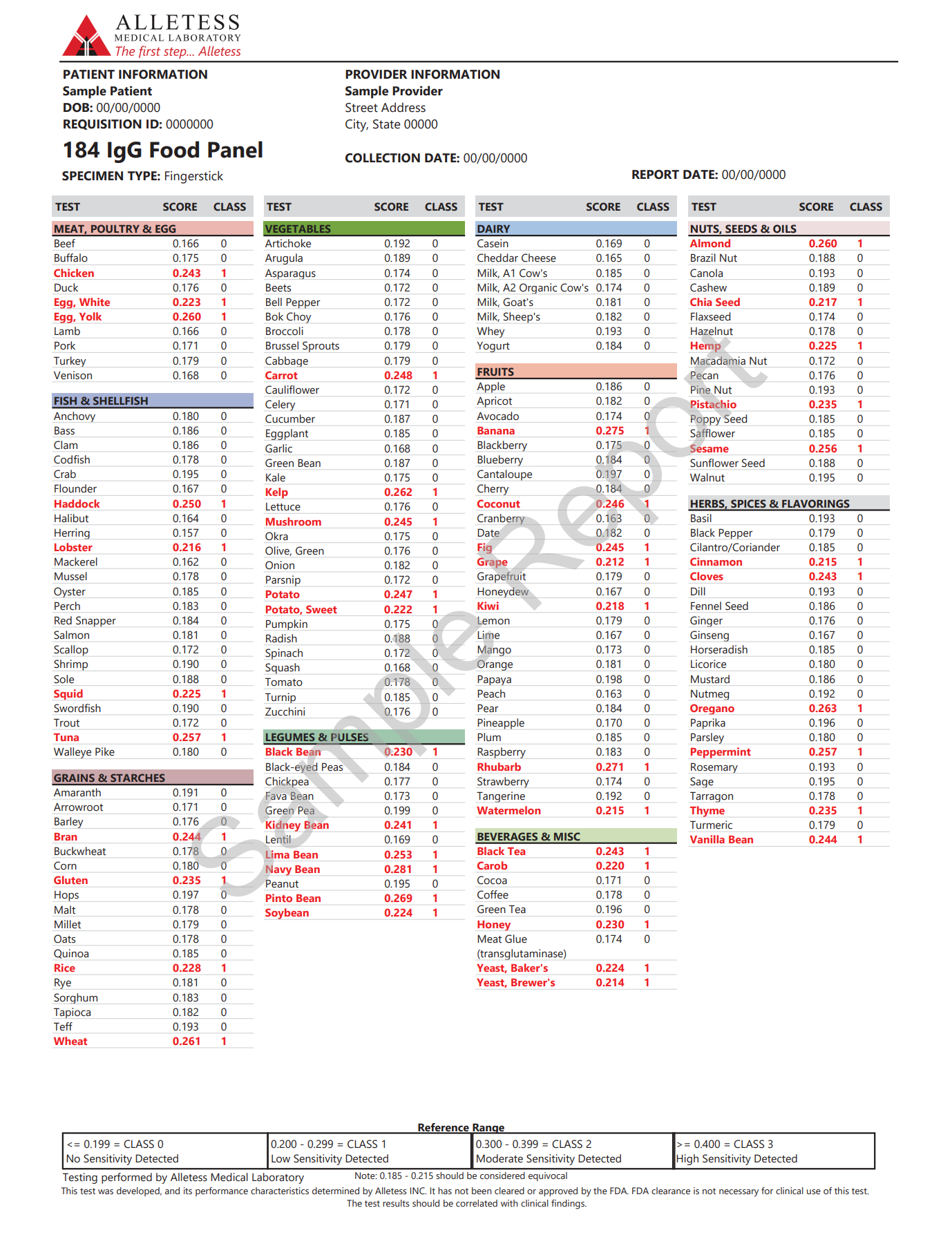
The 184 Food Sensitivity IgG FingerStick Test measures IgG antibodies that the immune system produces in response to specific foods. Elevated IgG reactivity may indicate that a food is recognized by the immune system and could be associated with sensitivity-type responses.
| MEAT, POULTRY AND EGG | VEGETABLES | DAIRY | NUTS, SEEDS AND OILS | |||||
| Beef | Artichoke | Casein | Almond | |||||
| Buffalo | Arugula | Cheddar Cheese | Brazil Nut | |||||
| Chicken | Asparagus | Milk, A1 Cow's | Canola | |||||
| Duck | Beets | Milk, A2 Organic Cow's | Cashew | |||||
| Egg, White | Bell Pepper | Milk, Goat's | Chia Seed | |||||
| Egg, Yolk | Bok Choy | Milk, Sheep's | Flaxseed | |||||
| Lamb | Broccoli | Whey | Hazelnut | |||||
| Pork | Brussel Sprouts | Yogurt | Hemp | |||||
| Turkey | Cabbage | Macadamia Nut | ||||||
| Venison | Carrot | FRUITS | Pecan | |||||
| Cauliflower | Apple | Pine Nut | ||||||
| FISH AND SHELLFISH | Celery | Apricot | Pistachio | |||||
| Anchovy | Cucumber | Avocado | Poppy Seed | |||||
| Bass | Eggplant | Banana | Safflower | |||||
| Clam | Garlic | Blackberry | Sesame | |||||
| Codfish | Green Bean | Blueberry | Sunflower Seed | |||||
| Crab | Kale | Cantaloupe | Walnut | |||||
| Flounder | Kelp | Cherry | ||||||
| Haddock | Lettuce | Coconut | HERBS, SPICES AND FLAVORINGS | |||||
| Halibut | Mushroom | Cranberry | Basil | |||||
| Herring | Okra | Date | Black Pepper | |||||
| Lobster | Olive, Green | Fig | Cilantro/Coriander | |||||
| Mackerel | Onion | Grape | Cinnamon | |||||
| Mussel | Parsnip | Grapefruit | Cloves | |||||
| Oyster | Potato | Honeydew | Dill | |||||
| Perch | Potato, Sweet | Kiwi | Fennel Seed | |||||
| Red Snapper | Pumpkin | Lemon | Ginger | |||||
| Salmon | Radish | Lime | Ginseng | |||||
| Scallop | Spinach | Mango | Horseradish | |||||
| Shrimp | Squash | Orange | Licorice | |||||
| Sole | Tomato | Papaya | Mustard | |||||
| Squid | Turnip | Peach | Nutmeg | |||||
| Swordfish | Zucchini | Pear | Oregano | |||||
| Trout | Pineapple | Paprika | ||||||
| Tuna | LEGUMES AND PULSES | Plum | Parsley | |||||
| Walleye Pike | Black Bean | Raspberry | Peppermint | |||||
| Black-eyes Peas | Rhubarb | Rosemary | ||||||
| GRAINS AND STARCHES | Chickpea | Strawberry | Sage | |||||
| Amaranth | Fava Bean | Tangerine | Tarragon | |||||
| Arrowroot | Green Pea | Watermelon | Thyme | |||||
| Barley | Kidney Bean | Turmeric | ||||||
| Bran | Lentil | BEVERAGES AND MISC | Vanilla Bean | |||||
| Buckwheat | Lima Bean | Black Tea | ||||||
| Corn | Navy Bean | Carob | ||||||
| Gluten | Peanut | Cocoa | ||||||
| Hops | Pinto Bean | Coffee | ||||||
| Malt | Soybean | Green Tea | ||||||
| Millet | Honey | |||||||
| Oats | Meat Glue | |||||||
| Quinoa | Yeast, Baker's | |||||||
| Rice | Yeast, Brewer's | |||||||
| Rye | ||||||||
| Sorghum | ||||||||
| Tapioca | ||||||||
| Teff | ||||||||
| Wheat |
Food Sensitivity vs. Food Allergy vs. Food Intolerance
It is important to understand the differences between food sensitivity, food allergy, and food intolerance:
-
Food Sensitivity (IgG): This test measures IgG antibody responses that are linked to delayed immune reactions. Symptoms may not appear until hours or days after eating, making sensitivities difficult to track without testing.
-
Food Allergy (IgE): Food allergies involve IgE antibodies, which typically cause immediate and sometimes severe reactions, such as hives, swelling, or anaphylaxis. Allergy testing is different and requires medical oversight.
-
Food Intolerance: Intolerances do not involve the immune system. Instead, they occur when the body has difficulty digesting or processing certain foods (such as lactose intolerance). These usually result in gastrointestinal discomfort soon after eating.
This test is exclusively an IgG food sensitivity test. It does not diagnose allergies or intolerances. Rather, it helps highlight potential immune recognition patterns that can inform dietary decisions in collaboration with a healthcare provider.
How Patients and Healthcare Providers Use the Results
The results of the 184 Food Sensitivity IgG FingerStick Test provide structured data that can guide individuals and healthcare providers in understanding potential dietary triggers. The report categorizes foods by levels of IgG reactivity, creating a clear map of which foods may warrant closer observation.
Healthcare providers may use these results to:
-
Suggest elimination or rotation diets that focus on reducing IgG-reactive foods.
-
Correlate immune responses with reported symptoms.
-
Tailor nutrition plans that support digestive health, energy, and overall balance.
-
Monitor changes in food reactivity patterns with follow-up assessments.
For individuals, the test results create a more organized approach to dietary modification. Instead of relying solely on guesswork or trial-and-error elimination diets, the test offers a science-based framework for exploration. With guidance, individuals can experiment with dietary changes more confidently, track responses, and work toward improved overall wellness.
Consider the 205 Food Sensitivity IgG FingerStick Test
For those seeking the most comprehensive assessment available, the 205 Food Sensitivity IgG FingerStick Test builds upon the 184-panel by including additional specialty foods, spices, and culturally diverse dietary items. This expanded panel can be particularly useful for individuals with highly varied diets, those who enjoy international cuisine, or those who want to explore every possible angle of food-related immune reactivity.
While the 184-panel already provides a detailed picture, the 205-panel is designed for individuals who want maximum coverage of their diet. It offers deeper insights, covering foods not included in the smaller panels, thereby supporting the most complete evaluation of IgG-mediated food sensitivities.
Conclusion
The 184 Food Sensitivity IgG FingerStick Test offers an extensive evaluation of IgG immune responses to 184 foods, giving individuals and healthcare providers structured data to help guide dietary exploration. This test is not a diagnostic tool for food allergies or intolerances; instead, it highlights immune activity that may be associated with delayed food sensitivity responses.
With this comprehensive panel, individuals gain the ability to take a more evidence-informed approach to nutrition. Results can help focus dietary adjustments, reduce uncertainty, and encourage constructive discussions with healthcare professionals. Whether used as part of a wellness plan or as a step toward deeper dietary understanding, this test provides clarity and a path toward better-informed lifestyle choices.
Disclaimer: IgG testing is not diagnostic of food allergies, intolerances, or disease. Results should always be interpreted with a qualified healthcare provider.